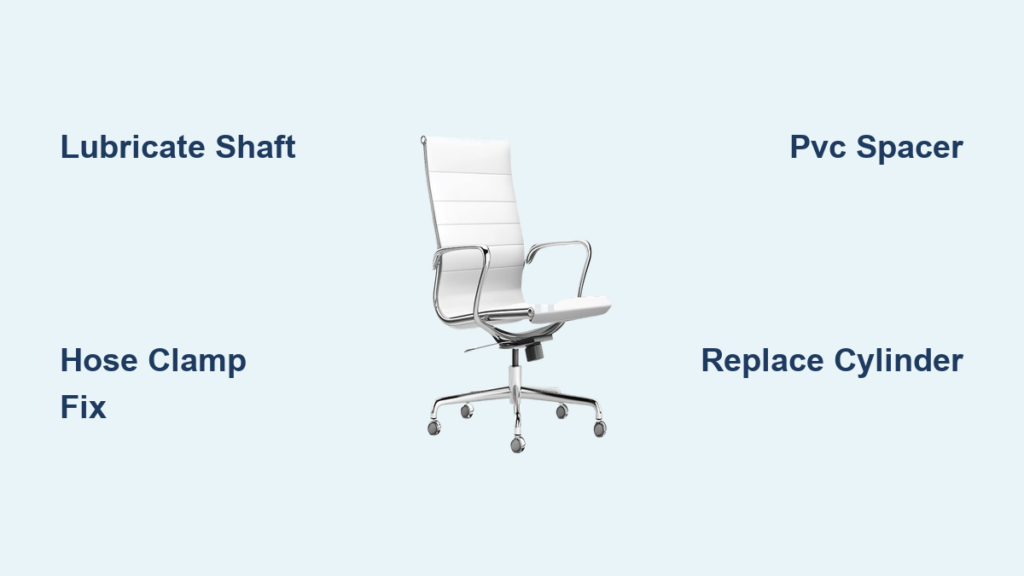
Is your desk chair slowly collapsing under you during work? You’re not alone. A sinking office chair is one of the most common ergonomic frustrations, disrupting focus, straining your back, and making long hours at your desk unbearable. The good news: in 9 out of 10 cases, the problem isn’t the entire chair, but a single failing part, and you can fix it yourself for under $30.
This guide walks you through every proven solution, from quick DIY hacks like lubrication and hose clamps to permanent repairs like gas cylinder replacement. You’ll learn how to diagnose the exact cause, choose the right fix for your situation, and maintain your chair to prevent the problem from returning.
Diagnose the Real Cause First
Before choosing a fix, confirm what’s actually making your chair sink. Targeting the wrong problem wastes time and money.
Check for Cylinder Leak Signs
Flip the chair upside-down and examine the chrome piston shaft. Raise the seat to its highest point and mark where the shaft enters the cylinder base. Sit on the chair normally and watch the shaft. If it retracts past your mark, the gas cylinder is leaking.
Watch for these patterns:
• Slow sinking throughout the day indicates early seal wear
• Immediate drop when seated means complete seal failure
• Stuck at lowest height signals a fully depressurized cylinder
A chair that sinks only when reclining or after bumping the lever may have a mechanical linkage issue, not a bad cylinder. Don’t guess—correct diagnosis saves money.
Test the Height Adjustment Lever
Sit upright and raise the chair to its highest position. If it holds height until you move your legs near the lever, the actuator linkage is loose or misaligned. The lever might be pressing the valve pin unintentionally. This means the cylinder could still be functional, so you won’t need to replace it.
Verify Weight Capacity
Check the label under the seat or in the manual. Most standard chairs support 250 to 300 pounds. Exceeding this shortens cylinder life significantly. If you’re near or over the limit, consider upgrading to a heavy-duty chair rated for 400 to 600 pounds after fixing the current one.
Try Lubrication First (Fast and Cheap Fix)
For early-stage sinking, lubricating the piston shaft is the fastest and most cost-effective solution. This method works for over 90% of users.
Why Lubrication Works
Dried internal seals lose elasticity, allowing gas to leak. Lubricant can rehydrate the rubber gasket and improve its seal, slowing or stopping the descent. The process takes under 10 minutes and costs roughly $5.
Apply 3-in-1 Oil Correctly
Flip the chair upside-down and apply a thin bead of 3-in-1 oil around the top of the piston shaft where it enters the cylinder base. Move the seat up and down 10 to 15 times to work in the oil. Wipe off excess and let it sit for 10 minutes before testing.
3-in-1 oil works because it’s lightweight, non-greasy, and designed specifically for metal mechanisms. Silicone spray and treadmill lubricant are also effective alternatives. Use WD-40 sparingly—it can displace existing lubricant and worsen sinking if over-applied. Vegetable oil works temporarily but can gum up over time.
How Long Does It Last
Success rate exceeds 90%, with duration ranging from 6 months to several years depending on usage. This fix works best for early sinking and serves as an excellent test of cylinder viability. If sinking returns quickly, the seal is too far gone, and you should move to a permanent fix.
Use a Hose Clamp (Temporary Height Lock)
Need an instant fix without disassembling anything? The hose clamp method locks your chair at a fixed height in about 5 minutes.
What You’ll Need
Gather an adjustable hose clamp (¾ inch or 2 cm), flat-blade screwdriver, and optionally some duct tape or rubbing alcohol for cleaning the cylinder first.
Install in Five Minutes
Adjust the chair to your ideal working height with feet flat and knees at 90 degrees. Clean the cylinder with alcohol, then place the clamp about 1 to 1.5 inches below the seat mechanism. Tighten firmly with a screwdriver and test by sitting.
The hose clamp costs under $8, requires no tools beyond a screwdriver, and is completely reversible. The downside is that height becomes permanently fixed, and the clamp can scratch chrome if overtightened. It’s best for temporary fixes, budget users, or testing a preferred height before making permanent modifications.
Install a PVC Pipe Spacer (Durable and Inexpensive)

For a longer-lasting non-adjustable fix, PVC pipe spacers physically block the cylinder from compressing further.
Choose the Right PVC Size
Select PVC with an inner diameter of 1 to 1.5 inches (3.8 cm). The length should match the exposed cylinder length at your desired height.
Step-by-Step Installation
Flip the chair and remove the retaining clip and washer from the base. Pull out the cylinder-wheelbase assembly and measure the exposed shaft. Cut the PVC pipe to that length, then slide the spacer onto the cylinder. Reinstall the washer and clip, reinsert into the seat, and test.
The spacer creates a hard stop that prevents the cylinder from retracting further. This method lasts for years under normal use and provides excellent stability. However, height becomes fixed, and PVC can crack under heavy loads. Use impact-resistant PVC or nylon tubing for better durability.
Try Office Chair Hero (Clean Commercial Fix)
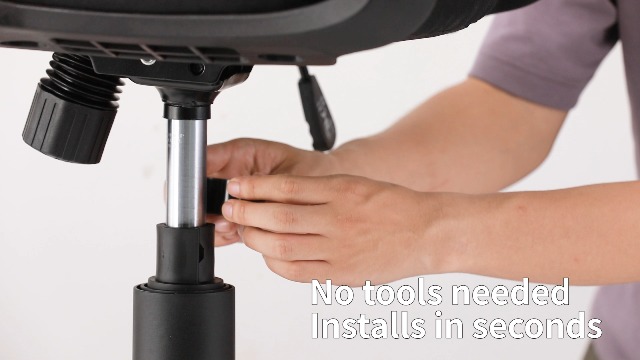
Want a no-tools, reusable, and professional-looking solution? Office Chair Hero offers a stackable plastic blocker system.
How It Works
The product includes four U-shaped plastic tubes in small, medium, and large sizes. Snap them around the cylinder at your desired height and stack them for incremental height control. The system supports up to 600 pounds.
Install in Under Five Minutes
Flip the chair, select and stack the tube sizes you need, snap them around the cylinder below the seat, then reassemble and test. No tools required.
This method looks cleaner than hose clamps or PVC, is reusable on other chairs, and lasts for years. The cost runs $20 to $30, which is slightly more than DIY options but worth it for appearance and ease.
Replace the Gas Cylinder (Permanent Fix)
If you want full height adjustability restored, replacing the gas lift cylinder is the only true permanent solution.
When to Replace
Choose this option if the chair is otherwise in good condition, you need adjustable height, temporary fixes have failed, or sinking is rapid or constant.
Find the Right Cylinder
Most chairs use a 50mm (1.97 inch) diameter cylinder. Check the stroke length (typically 100 to 120mm), top plate shape (must match your seat), and quality grade. Class 3 cylinders rate for 100,000 cycles while Class 4 rates for 120,000+ cycles, which is better for heavy users. Look for SGS, TÜV, or BIFMA certification for reliability.
Cost and Tools
Cylinder-only costs $20 to $35, while full kits with tools run $30 to $50. You’ll need a flat-blade screwdriver, cylinder removal tool (highly recommended), Allen wrench, and gloves with safety glasses.
Step-by-Step Replacement
Flip the chair and remove the retaining clip and washer. Pull out the base-cylinder assembly. Use a removal tool by inserting the base into it and tightening extraction screws with an Allen wrench until the cylinder pops free. Alternatively, tap the base firmly over a trash can with a hammer 3 to 4 times. Install the new cylinder by pressing the release button to retract it, inserting the top into the seat, sliding the base onto the bottom, reinstalling the washer and clip, and testing upright.
Emergency Fixes (Quick Stabilization)

Need to stop sinking immediately? Use these short-term hacks to buy yourself time.
Cling Film or Duct Tape Wrap
Wrap 5 to 10 layers of plastic wrap or duct tape around the piston shaft, then reinsert into the seat. The added friction slows sinking. This works for hours to a couple of days but isn’t a real fix.
Zip Ties
Loop 2 to 3 heavy-duty zip ties around the cylinder and base. It’s super fast but looks ugly and can damage the cylinder if overtightened.
Fix a Misaligned Lever (Mechanical Issue)
If your chair sinks even with a new cylinder, the actuator linkage might be pressing the valve pin constantly.
Diagnose the Problem
Chair sinks without touching the lever, or a new cylinder was installed but the issue persists. This indicates constant pressure on the valve rather than a cylinder problem.
Add Spacer Washers
Remove the seat (4 to 5 bolts with a hex key) and place thin washers or plastic spacers between the seat plate and chair body. Reattach and test. The goal is creating a gap so the lever only engages when pulled. Start with one washer—too many prevent height adjustment entirely.
Prevent Future Sinking (Maintenance Tips)
Avoid repeat issues with these simple habits.
Clean the Cylinder Monthly
Wipe the shaft with a dry cloth and remove dust, hair, and debris. Use compressed air around the base to clear accumulated particles.
Lubricate Every Six to Twelve Months
Apply 3-in-1 oil or silicone spray to the shaft. Avoid grease—it attracts dirt and creates more problems than it solves.
Reduce Daily Wear
Lift the chair rather than dragging it, use a chair mat on carpet, and avoid yanking the height lever. These habits significantly extend component life.
Check Hardware Monthly
Tighten bolts on the tilt mechanism, base, and armrests. Inspect for cracks or bent parts. Store the chair in temperatures between 68 and 76°F (20 to 24°C), away from direct sunlight.
Stay Within Weight Limits
Treat the weight rating as a durability threshold, not a maximum. If you’re near the limit, upgrade to a 400 to 500 pound chair.
When to Replace the Chair
Sometimes repair isn’t worth it. Replace if the base is cracked or split (unsafe), persistent wobbling exists after tightening, the tilt mechanism has failed, multiple parts are broken, the chair is over 5 years old, or repair cost exceeds 50% of a new chair price.
Safety First
A gradually sinking chair is mostly an ergonomic concern. Sudden collapse creates fall risk, but explosion risk is extremely rare, occurring only if the cylinder is punctured, overheated, or modified improperly. Always wear gloves and eye protection when handling cylinders, use correct tools, and never drill or attempt to refill a gas cylinder.
Frequently Asked Questions About Stopping a Desk Chair from Sinking
Can I fix a sinking chair without replacing the gas lift?
Yes. Temporary fixes like PVC spacers, hose clamps, or height extender rings can lock the chair at a fixed height. However, these methods do not restore adjustability. For a reliable long-term fix that preserves height adjustment, cylinder replacement is recommended.
Why does my chair sink only when I lean back?
Reclining shifts your center of gravity and applies torque to the mechanism. This can cause a loose linkage to press the valve pin. Check the tilt mechanism and lever alignment. If the chair holds height when upright, the issue is mechanical rather than a failing cylinder.
How long does a gas lift cylinder usually last?
Under normal use, a gas cylinder lasts 3 to 5 years. Lifespan decreases with heavy loads, frequent adjustments, dust accumulation, or rough handling. Regular maintenance can help maximize the functional life.
Is replacing a gas lift safe to do at home?
Yes, with proper caution. The main risk is injury during removal due to the tight fit. Use appropriate tools, wear protection, and work slowly. If you’re uncomfortable with the process, seek professional help.
What tools are needed to replace an office chair gas lift?
For cylinder replacement, you’ll need a rubber mallet, pipe wrench or adjustable wrench, gloves, safety glasses, and optionally penetrating oil. For temporary fixes, gather a measuring tape, saw, PVC pipe, hose clamp, and duct tape.
How do I stop myself from sliding off my chair?
This is unrelated to sinking. Causes include slippery upholstery, worn fabric, or poor posture. Solutions include reupholstering with grippy fabric like mesh, using a non-slip seat cushion, or cleaning with appropriate upholstery cleaner.
Final Action Plan to Stop Your Desk Chair from Sinking
Start by diagnosing whether the issue is a leaking cylinder, loose lever, or misaligned linkage. Try lubrication first—it’s cheap, fast, and often effective. Use a hose clamp or PVC spacer if you need a quick temporary fix. Replace the cylinder for full adjustability and permanent results. Perform monthly maintenance including cleaning, lubrication, and hardware checks to prevent recurrence. Upgrade to a new chair if the base is cracked, multiple components have failed, or the chair is over 5 years old.
The bottom line: you don’t need a new chair to stop sinking. Nine out of ten cases can be fixed with a $5 lubricant, a $10 spacer, or a $30 cylinder swap. Start with lubrication, test the cause, then choose your fix. With proper care, your chair can stay stable, comfortable, and productive for years.