Moving a desk upstairs seems simple until you hit the stairs. Suddenly that sturdy workstation becomes a bulky, awkward obstacle, threatening scraped walls, strained backs, and failed attempts. Whether it is a 200-pound solid wood desk or a compact writing table, how to move a desk upstairs safely and efficiently requires strategy, preparation, and the right tools.
This guide provides a step-by-step plan based on professional moving techniques. You will learn how to measure your path, disassemble the desk when needed, use proper lifting posture, and decide whether to DIY or call professionals. By the end, you will be equipped to get your desk upstairs without damage or injury.
Measure the Path Before You Start
Before lifting a single drawer, measure every inch of your route. Most failed furniture moves happen because of overlooked dimensions, not lack of strength.
Check Staircase Clearance
Use a tape measure to record these critical dimensions:
- Stairwell width at the narrowest point
- Ceiling height at landings
- Doorway and hallway widths
- Tread depth and riser height
A 32-inch wide desk will not fit through a 30-inch doorway, even if it seems close. Every inch matters when navigating tight spaces.
Watch for Hidden Obstacles
- Handrails and banisters reduce usable space by 3 to 6 inches
- Light fixtures or wall moldings can block vertical clearance
- Tight 90-degree turns at landings often trap large items mid-move
Pro Tip: Do a dry run with a cardboard mock-up of the desk. Tape it together and try to maneuver it upstairs. If it gets stuck, you will know before lifting the real thing.
Disassemble the Desk When Possible
Taking the desk apart is often the easiest way to beat tight corners and reduce weight significantly.
Remove Detachable Parts
- Drawers, legs, shelves, and tops can usually be removed
- Label each part with numbered tags matching hardware bags
- Tape screws and bolts to the underside of the desktop
A 200-pound desk can drop to 80 to 100 pounds in pieces, making it much easier to carry and safer to handle.
Choose Furniture Designed for Stairs
Some desks are built for hard-to-reach rooms:
- Flat-pack or in-room assembly models
- Modular workstations that snap together
- Amish-made or heavy-duty furniture designed for final assembly
Family Tip: When buying new, ask, “Can this be assembled upstairs?” It could save a major headache later.
Use the Right Moving Equipment
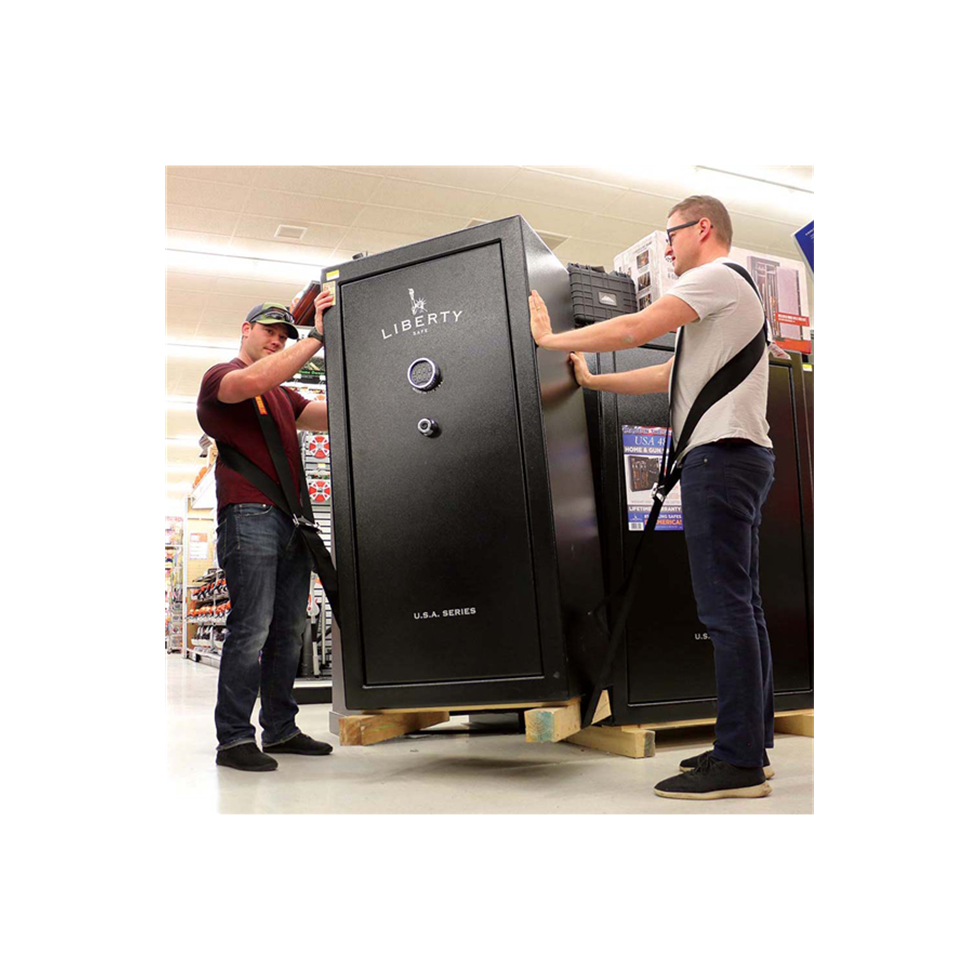
No amount of strength replaces proper tools. Using the wrong gear risks injury and damage to your home.
Essential Tools List
| Tool | Why You Need It |
|---|---|
| Stair-climbing dolly | 2-wheel design grips steps; never use a 4-wheel dolly on stairs |
| Moving straps | Shift weight to legs and shoulders, reducing back strain |
| Shoulder dolly system | Two-person harness setup for balanced lifting |
| Moving blankets and stretch wrap | Protect surfaces and prevent shifting |
| Furniture sliders | Slide desk into final position without lifting |
| Stair edge guards | Prevent dolly wheels from gouging wood or marble steps |
DIY Alternative: No moving blankets? Use old quilts, thick towels, or cardboard to pad corners.
Using a Stair-Climbing Dolly
Follow these steps for safe stair climbing:
- Lift the desk onto the dolly, centering the weight on the base
- Align the longest side with the upright support
- Secure with straps or bungee cords
- Tilt the dolly backward toward you
- Pull it up one step at a time using a rocking motion
- Have a helper guide and support the top to prevent tipping
Lift Safely with Proper Technique
Back injuries top the list of moving accidents. Use correct form every time you lift.
Master the Lift
- Bend your knees and keep your back straight
- Grip firmly and pull the desk close to your body
- Lift with your legs, not your arms or back
- Keep movements slow and controlled
Warning: If you feel strain in your lower back, stop immediately. Reassess your grip, stance, or need for help.
Use the High-Low Stair Method
This is the professional standard for two-person moves:
- Stronger person at the bottom bears 60 to 70 percent of the weight due to gravity
- Top person acts as guide, sees the path, sets the pace, and steers around corners
Physics Fact: On a 37-degree staircase, a 200-pound desk can exert up to 260 pounds of force on the lower mover.
Navigate Stair Turns and Landings
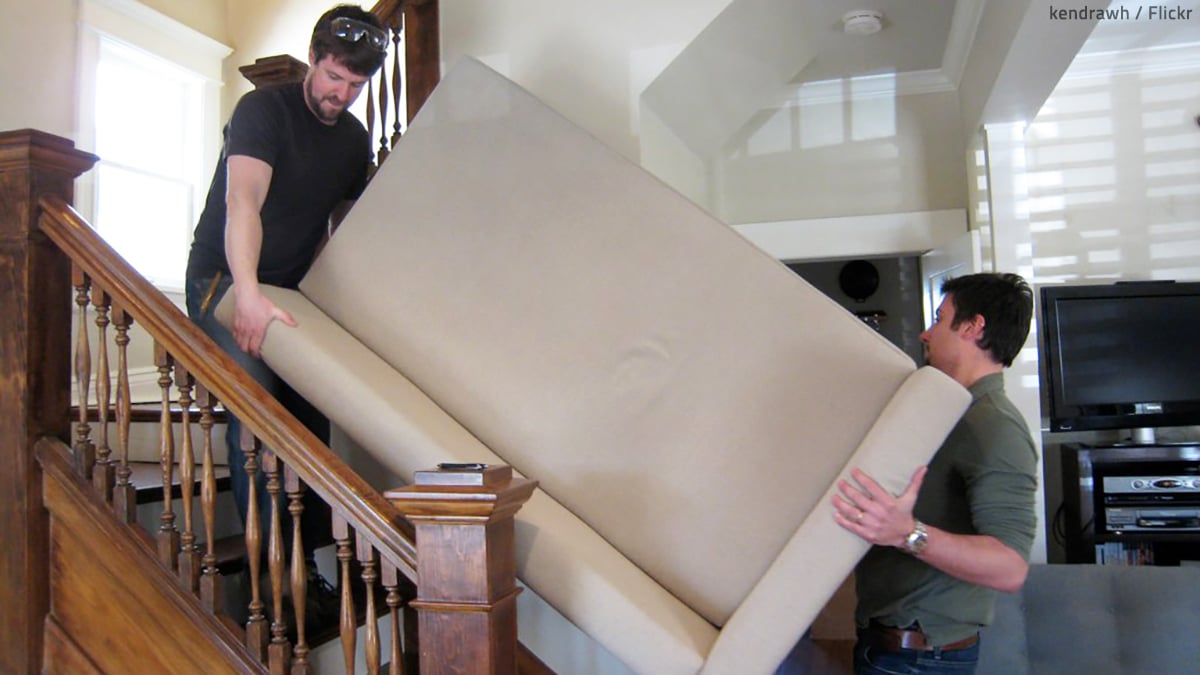
Even with perfect preparation, landings are where most moves go wrong. Knowing the right techniques saves the day.
Pivot Technique for 90-Degree Turns
Use this method at L-shaped or U-shaped landings:
- Stand the desk on its end, one side up
- Bottom mover braces the base while top mover rotates the top
- Use moving blankets to protect walls
- Lower carefully once aligned with the next flight
Caution: Only attempt this with a partner. The move requires balance and coordination.
Hook Method for Tight Corners
When a full pivot will not work:
- Angle one corner through the turn
- Hook the desk around the obstacle
- Pivot the rest around that anchor point
Pro Tip: Combine this technique with door removal for extra clearance.
Clear the Path for Extra Space
Sometimes the only way is to modify the route by removing obstacles.
Remove Doors and Fixtures
- Take doors off hinges to gain 1 to 2 inches of width
- Unscrew handrail sections if they block the path
- Remove light fixtures that hang too low
Use Alternative Entry Points
- Back door or balcony access may offer a better angle
- Window entry with rigging works for upper floors but requires professionals
Extreme Case: For spiral or helical stairs, consider crane or hoist delivery, which movers use for pianos and heavy antiques.
When to Hire Professional Movers
Some desks and staircases demand expert help. Know when to call in the pros.
Red Flags You Need Pros
- Desk weighs over 200 pounds
- Stairs are spiral, narrow, or curved
- Path includes low ceilings or fragile finishes
- You are uncomfortable with the risk
- No access to stair-climbing dollies or lifting straps
Fact: Over 100,000 injuries per year are linked to stair furniture moves. Professionals have training, gear, and insurance.
Benefits of Hiring Movers
- Specialized equipment including stair climbers and rigging straps
- Trained teams with coordinated lifting techniques
- White-glove service with in-room placement and reassembly
- Damage protection through insurance coverage
- Time saved compared to DIY efforts
Protect Floors, Walls, and Stairs
Damage prevention is part of the job. Protect your home while moving the desk.
Floor and Stair Protection
- Use stair edge guards to shield wood or marble steps
- Lay moving pads or cardboard on floors
- Cover handrails and walls with blankets in tight turns
Furniture Protection
- Wrap the desk in thick moving blankets
- Secure with stretch wrap, but avoid direct tape on wood
- Pad sharp corners with foam or bubble wrap
Pro Move: Tape a blanket to the wall at shoulder height in tight spots. It acts as a sliding buffer.
Final Checklist for Success
Use this list before you start your move:
- Measure desk and path including doorways, stairs, and landings
- Disassemble desk by removing drawers, legs, and shelves
- Label parts and hardware, tape bags to the desktop
- Gather tools including dolly, straps, gloves, and non-slip shoes
- Clear the route by removing doors, light fixtures, and obstacles
- Wrap and protect using blankets and padding
- Enlist help, never move a heavy desk alone
- Use high-low lift method with stronger person at bottom
- Communicate clearly with commands like “Lift on three” and “Turn left”
- Call pros if needed when weight, space, or risk is too high
Prevent Future Moving Headaches
Think ahead. Next time, choose furniture that is easy to move upstairs.
Stair-Friendly Furniture Types
| Type | Why It Works |
|---|---|
| Flat-pack desks | Ship in boxes, assembled in-room |
| Modular workstations | Break into carryable sections |
| Come-apart designs | Legs and tops detach easily |
| Small-scale pieces | Fit through narrow halls and turns |
Family Tip: Always ask, “Can this be assembled upstairs?” before buying any furniture.
Frequently Asked Questions About Moving a Desk Upstairs
How do I know if my desk will fit through the stairs?
Measure the desk height, width, and depth, then measure the narrowest points of your staircase, doorways, and hallways. Subtract the desk dimensions from the path dimensions. If you have negative clearance, you will need to disassemble the desk or use an alternative route.
Can I move a desk upstairs by myself?
It is not recommended for desks over 50 pounds. The risk of injury and damage is too high. Always enlist at least one helper for safety and maneuverability.
What is the safest way to lift a desk on stairs?
Use the high-low technique with two people. The stronger person stands at the bottom to bear more weight, while the person at the top guides the path. Both should bend their knees, keep their backs straight, and lift with their legs.
How much does it cost to hire professional movers for a desk?
Costs vary by location and difficulty, but expect to pay $100 to $300 for a local move involving stairs. Complex moves with spiral stairs or very heavy desks can cost significantly more.
Should I remove the desk drawers before moving it upstairs?
Yes, always remove drawers and any detachable parts. This reduces weight significantly and makes the desk easier to maneuver around corners and through doorways.
Key Takeaways for Moving Your Desk Upstairs
Knowing how to move a desk upstairs is not about brute strength. It is about smart planning, the right tools, and respecting your physical limits. Measure your path first, disassemble when possible, and use proper lifting technique with a partner.
Whether you DIY with a stair dolly or hire professionals with rigging gear, success comes from preparation, protection, and proper technique. Take your time, stay safe, and your desk will be upstairs and intact in no time.