You have just purchased a new desk chair, perhaps a breathable mesh model for long workdays or a vibrant Sunaofe Color Is Power chair to energize your home office. But before you can sit down and focus, you need to assemble it. The good news is that assembling a desk chair is a straightforward task that most people can complete in 20 to 40 minutes with basic tools and clear instructions.
The keyword how to assemble a desk chair leads many users to this exact moment: parts scattered on the floor, hardware bag in hand, wondering where to start. This guide provides a comprehensive breakdown that works for nearly any standard office chair, from ergonomic executive models to budget-friendly designs. You will learn how to identify every component, attach casters securely, connect the gas lift cylinder correctly, and avoid common assembly mistakes like a chair that sinks when you sit down or wobbles after a week of use.
Prepare Your Workspace for Assembly
Before touching any parts, set yourself up for success. A clean, organized workspace prevents lost screws and accidental damage to your floor or chair.
Lay out a soft surface like a towel, cardboard, or moving blanket on a flat area. This protects the chair finish and reduces strain when flipping the seat pan. Open the box carefully and remove all components. Refer to the instruction manual parts list to verify everything is included: seat, backrest, armrests, base, casters, gas cylinder, and hardware pack.
Group similar items together. Place screws and bolts in a small bowl or ziplock bag to avoid misplacement. Keep the included Allen key or screwdriver within reach. If your model is color-coded like the Sunaofe Color Is Power chair, match parts by color to simplify alignment.
Pro Tip: Assemble near the final location. A fully built chair can be awkward to move, especially with delicate casters.
Attach Casters to the Star Base

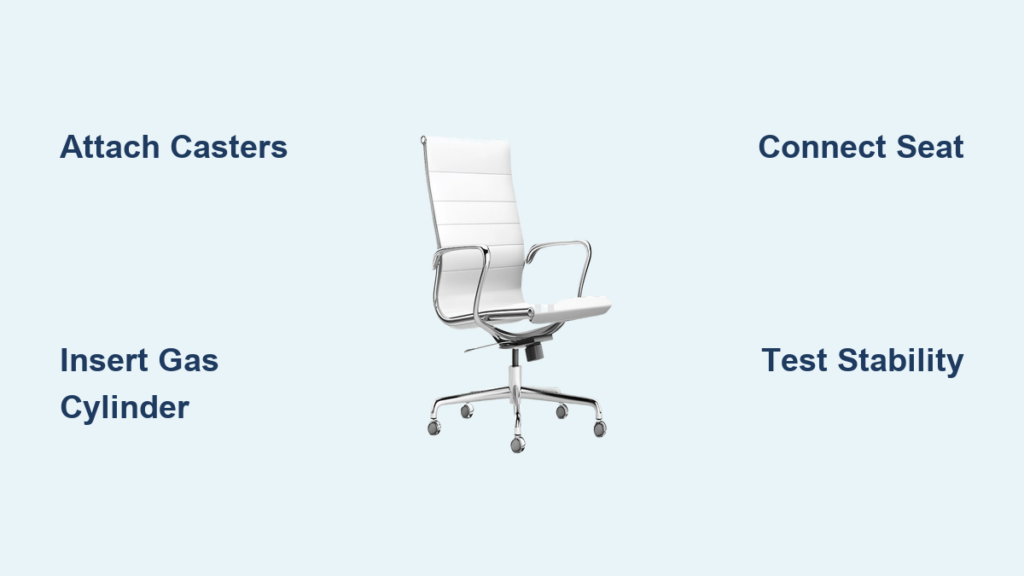
Most desk chairs use a five-prong star base with pre-drilled sockets for casters. Start by holding the base steady with casters facing down.
Take one caster and align it with a socket. Press straight down with firm, even pressure. You should hear a soft click when it locks into place. Repeat for all five wheels.
Visual Cue: Dual-wheel casters should roll smoothly and face forward. If a wheel spins unevenly, pop it out and reinsert.
Once all casters are attached, gently tug each one to confirm it is secure. A loose caster can lead to instability or floor scratches.
Common Mistake: Forcing a caster at an angle can crack the base. Always insert straight down.
Insert the Gas Lift Cylinder
Turn the base over so the center hole faces up. Take the gas lift cylinder, which is the long silver pneumatic rod, and identify the narrow end. This is the piston side and it goes up into the base.
Align the narrow end with the center hole and push down firmly. Use both hands and steady pressure until the cylinder is fully seated and does not wobble.
Warning: Never insert the wide end first. It will not connect to the seat mechanism and could cause the chair to collapse.
Expert Note: If the fit is tight, a rubber mallet can help. Tap the top of the cylinder gently. Never strike the metal shaft directly.
Assemble the Seat Components
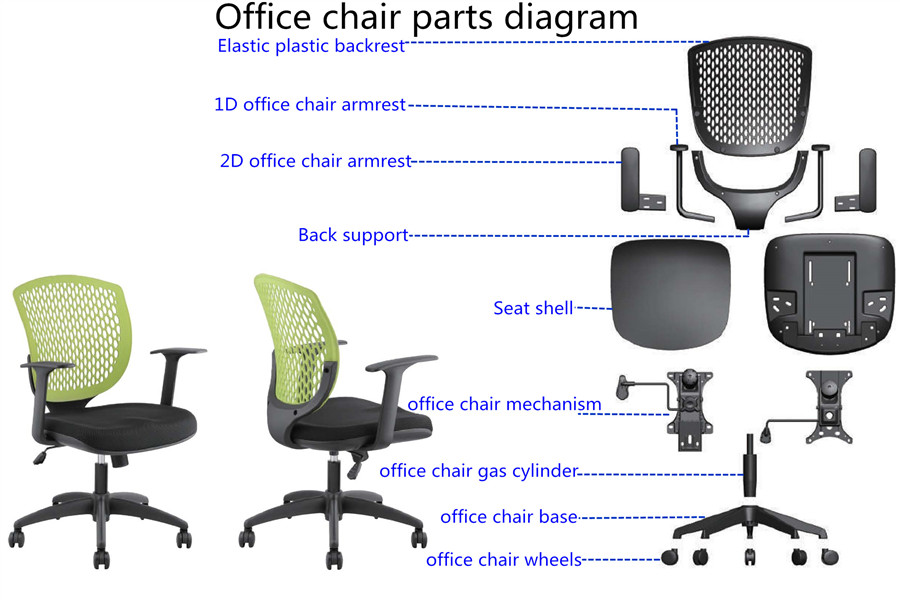
Flip the seat pan face down on your soft surface. Locate the two or four mounting holes at the rear edge.
Take the backrest and align its brackets with the holes. Insert the provided screws through the seat and into the backrest. Use the included Allen key or screwdriver to tighten them gradually in a crisscross pattern. This prevents warping.
Ensure the backrest sits straight and does not rattle. On mesh chairs, confirm the tilt mechanism is properly seated and the tension knob turns smoothly.
Pro Tip: For the Sunaofe Color Is Power chair, use color-matched screws for visual consistency.
Install the Armrests
Locate the armrest mounting points on both sides of the seat. Depending on the model, armrests may snap in, slide into brackets, or require screws.
For screw-in types, position each armrest and insert hardware. Tighten securely but do not over-torque because plastic threads can strip easily.
If your chair has 3D or 4D adjustable armrests, set them to a neutral position during assembly for easier fine-tuning later.
Check: Both armrests should be at the same height and angle. Uneven armrests can cause shoulder strain.
Connect the Seat to the Gas Cylinder
With the backrest and armrests attached, lift the seat assembly. Align the center hole in the seat mechanism with the top of the gas cylinder.
Lower the seat straight down onto the cylinder. Apply firm, steady pressure. Use your body weight if needed. You will hear a distinct click when the mechanism locks into place.
Critical Check: Rock the chair gently. If the seat feels loose or sinks under pressure, disassemble and reseat the cylinder. Incomplete connection is the number one cause of chair failure.
Safety Note: Never sit on the chair until this connection is confirmed secure.
Test and Adjust Chair Functions
Now that the chair is fully assembled, test all functions to ensure everything works properly.
Test the seat height by pulling the lever under the seat to raise and lower. The mechanism should move smoothly across the full range. Test the tilt function by leaning back slightly. The backrest should recline with controlled resistance. Engage the tilt lock to keep the seat upright.
Sit in the chair and shift your weight side to side and front to back. No wobbling should occur.
Fine-Tune for Ergonomic Comfort
Adjust the chair to fit your body and desk for maximum comfort during long work sessions.
Set the seat height so your feet rest flat on the floor with thighs parallel to the ground. Position the armrests so elbows bend at 90 degrees when typing with shoulders relaxed. Adjust the backrest so lumbar support aligns with your lower back. Adjust height or angle if available.
Ergonomic Benchmark: Proper posture reduces back pain and boosts productivity during long work sessions.
Troubleshoot Common Assembly Issues
Several issues can occur after assembly. Here is how to address them.
Chair sinks when sat on: This almost always means the gas cylinder is not fully engaged. Disconnect the seat and reinsert it with more force. Ensure the click is audible and the fit is snug.
Wobbly base: Check that all casters are fully pressed into the base. If the base itself rocks, the cylinder may not be centered. Reinsert it squarely.
Uneven armrests: Loosen the mounting screws, realign the armrests, and retighten. For adjustable models, reset to default positions before final tightening.
Backrest rattles: Tighten all mounting screws in a crisscross pattern. If rattling persists, check for misaligned brackets or missing washers.
Prevention Tip: Recheck all screws after the first week of use. Initial movement can loosen connections.
Maintain Your Chair for Long-Term Use
Regular maintenance extends the life of your desk chair and keeps it functioning properly.
Perform a monthly hardware check using the Allen key to inspect and tighten all screws, especially those on armrests and the backrest. Loose hardware leads to premature wear.
Clean the casters and base by rolling the chair onto its side. Vacuum dust and hair from the base. Wipe casters with a damp cloth. For stuck debris, use tweezers or a small brush.
Lubricate the gas cylinder if height adjustment feels stiff. Apply silicone spray to the cylinder shaft. Avoid oil-based lubes because they attract dirt.
Replace worn parts by ordering manufacturer replacements for flattened or cracked casters, worn armrest pads, and failed gas cylinders. Gas cylinders commonly fail after three to five years.
Warranty Tip: Most chairs, including the Sunaofe Color Is Power model, offer one to three year warranties covering structural defects and cylinder failure.
Disassemble the Chair for Moving
When relocating, disassemble to protect parts and ease transport.
Remove casters by pulling straight out. Detach the seat from the cylinder by lifting straight up. This may require two people. Rock gently if stuck. Unscrew armrests and backrest if needed. Store hardware in a labeled bag taped to the base.
Caution: Never use excessive force. Damaged threads or a bent cylinder can ruin the chair.
Use Visual Assembly Aids for Support
Always consult the included instruction manual. It contains model-specific diagrams and torque recommendations.
Many brands, including Sunaofe, offer video tutorials on YouTube, Amazon Live, or TikTok. These show real-time assembly and help confirm correct alignment.
Pro Tip: Search your chair model name plus assembly video for step-by-step visual support.
Frequently Asked Questions About Desk Chair Assembly
How long does it take to assemble a desk chair?
Most standard desk chairs take 20 to 40 minutes to assemble. The time varies based on the chair complexity and your experience with similar assembly tasks.
What tools are needed to assemble a desk chair?
Most desk chairs come with necessary tools, typically an Allen wrench and sometimes a screwdriver. Additional helpful tools include a rubber mallet for seating the gas cylinder and a small bowl for hardware.
Why does my chair sink when I sit on it?
This problem usually occurs because the gas cylinder is not fully engaged with the seat mechanism. Disassemble the connection and reseat the cylinder with more force until you hear a distinct click.
Can I assemble a desk chair without help?
Yes, most desk chairs can be assembled by one person. However, having a second person can help with holding components steady during steps like connecting the seat to the gas cylinder.
How do I know if my chair is assembled correctly?
A correctly assembled chair should not wobble when you shift your weight. The seat height adjustment should work smoothly. The tilt function should engage and lock properly. All screws should be tight with no rattling parts.
Key Takeaways for Assembling Your Desk Chair
Knowing how to assemble a desk chair empowers you to set up a safe, ergonomic workspace without paying for professional help. By following these steps, you prepare your area, attach casters, insert the gas cylinder, mount seat components, and test stability to build a chair that is functional and tailored to your comfort.
Whether you are assembling a breathable mesh chair for coding marathons or a vibrant Sunaofe model to spark creativity, attention to detail ensures long-term performance. Take time to verify each connection before moving to the next step. A properly assembled chair provides years of comfortable use.
Keep this guide handy for future builds, maintenance, or troubleshooting. Your perfect seat is just a few steps away.