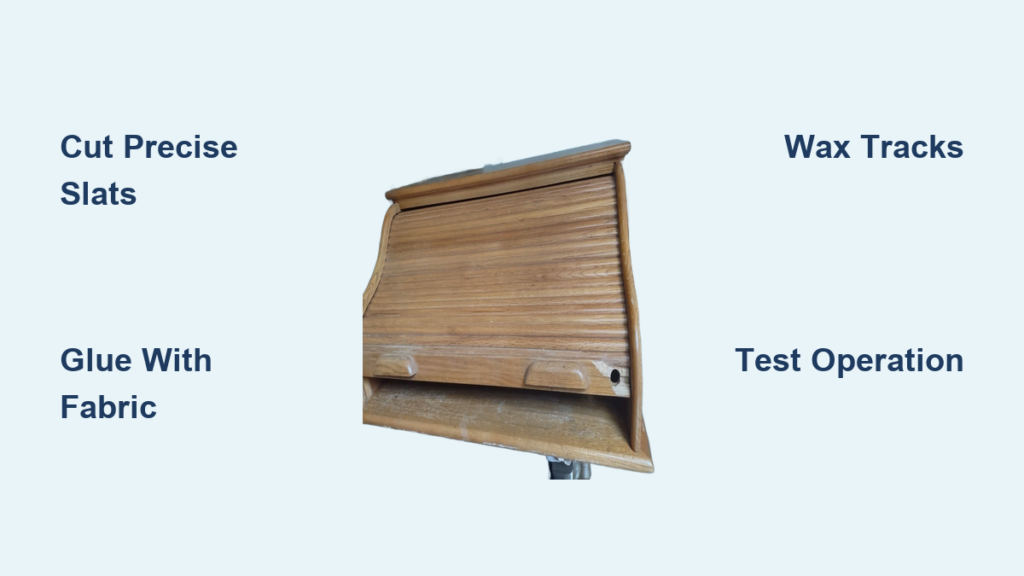
Imagine transforming your cluttered workspace into a sleek, vintage-inspired command center with a smooth-rolling tambour cover that glides shut with a whisper. The roll top desk cover, also known as a tambour, is more than just a functional closure. It is a hallmark of classic craftsmanship that gives you control over dust, visibility, and design. Whether you are building a full roll-top desk or retrofitting a modern cabinet, mastering the tambour creates a stunning focal point. This guide walks you through every step: selecting materials, cutting and assembling flexible slats, applying durable fabric backing, installing precision tracks, and finishing like a pro.
Build Your Tambour Slats with Precision

Start by preparing your slats, which form the backbone of the tambour. Use hardwood strips that are 1/8 inch to 1/4 inch thick, such as poplar, birch, or walnut. Each strip should be 3/4 inch wide and long enough to span the height of your desk opening plus clearance. For consistency, set up a crosscut sled on your table saw with two stop blocks: one angled at 45 degrees for beveled edges if desired, and one square for final length cuts. This ensures every slat matches perfectly, preventing misalignment when rolled.
Cut Uniform Wood Strips
Precision matters when cutting your slats. Uneven lengths cause binding and uneven operation. Cut all slats from the same batch of wood to maintain grain continuity and flexibility. Set your table saw with a sharp blade and take your time with each cut. Mark each slat with a sequence number if needed to track their order.
Use Dado Joints for Stability
To keep slats aligned under stress, cut dados into both ends of each strip. A 1/4 inch deep by 3/8 inch wide dado prevents lateral slippage during operation. Set your table saw with a dado blade stack, use a sacrificial fence on the miter gauge to control depth, and secure a stop block to ensure repeatable cuts. These dados add rigidity without sacrificing the tambour is ability to flex through its S-curve path. Without dados, slats may shift over time, especially in high-use areas.
Choose Your Tambour Construction Method
The traditional method uses individual hardwood slats glued to a flexible backing. Lay the slats face down on a flat surface, spaced tightly together. Apply wood glue to the back edges and lay a strip of heavy-duty cotton, canvas, or drop cloth fabric over the entire assembly. Press firmly to bond. This method delivers authentic aesthetics and excellent flexibility, but requires a large, flat clamping area.
Build with Solid Wood Slats and Fabric
The traditional method produces an authentic look that matches historical roll-top desks. Spread wood glue evenly across the back of each slat, then place the fabric over the array and press down firmly. Use a household iron on medium heat, no steam, to activate the glue and remove air pockets. Move slowly across the surface for 10 to 15 minutes, ensuring full adhesion. The heat helps the glue wick through the fabric fibers, creating a mechanical bond that is both strong and flexible.
Try Patterned Plywood at 45 Degrees
For a modern shortcut, use patterned or decorative plywood cut into long strips and glued edge-to-edge at a 45-degree angle. This technique maximizes usable length, yielding about 10 inches of continuous grain per cut. Arrange the strips diagonally on a flat base, align with a speed square, apply wood glue, and clamp flat using Shore foot clamps or edge clamps. After curing, scrape off excess glue with a paint scraper, then run the panel lightly through a thickness planer with the grain to smooth and uniformize thickness.
Combine Methods with Hybrid Construction
Run short on patterned plywood? Switch seamlessly to solid wood. Use 3/4 inch Baltic birch strips, same thickness as your plywood, to complete the upper section of the tambour. Glue them into the same fabric-backed system or join with edge glue and clamps. Match the finish carefully so the transition blends visually. Hybrid builds save material costs while maintaining structural integrity and design flow.
Apply Flexible Fabric Backing Correctly
The backing must flex thousands of times without tearing. Drop cloth fabric is ideal, durable, affordable at about $5, and porous enough for glue penetration. Cut it to the exact width of your tambour panel. Avoid synthetic blends because they resist glue and stretch unpredictably. Lay the fabric flat on your work surface before placing glued slats on top because any wrinkles now become permanent ridges later.
Pick a Strong, Bendable Fabric
Select a fabric that can withstand repeated flexing. Canvas and drop cloth fabrics work best because they create a strong mechanical bond with wood glue. Test the fabric flexibility by bending it sharply in your hands before committing to the material. Cheap or thin fabrics will fail prematurely.
Glue and Iron for a Lasting Bond
Spread wood glue evenly across the back of each slat. Place the fabric over the array, then press it down firmly. Use a household iron on medium heat, no steam, to activate the glue and remove air pockets. Move slowly across the surface for 10 to 15 minutes, ensuring full adhesion. The heat helps the glue wick through the fabric fibers, creating a mechanical bond that is both strong and flexible. Think of it like laminating. It seals the connection and prevents delamination over time.
Cut Corner Reliefs and Trim Excess
At the top and bottom corners of the fabric, cut small V-shaped notches to relieve tension. Without these, the fabric will lift or bubble when the tambour curves. After the glue cures, minimum 24 hours, trim any overhanging fabric with a utility knife. Once dry, gently separate each slat by hand. They should bend independently but remain securely anchored to the backing.
Construct the Tambour Frame
Use a scrap sheet of plywood as your build platform. Create a frame around the slat array using off-cut 2 by 4s. Long side pieces extend beyond the panel for clamping, short ends match the slat length. Secure with deck screws to form a stable boundary that keeps everything square during glue-up. This jig prevents warping and ensures straight edges critical for track alignment.
Build a Rigid Assembly Base
The frame serves as both a clamping system and a reference for squaring the tambour. Ensure all corners are exactly 90 degrees before driving screws. Check diagonals to confirm the frame is not racking. This attention to detail pays off during track installation.
Install a Reinforced Handle
The handle lets you pull the tambour up and down smoothly. Shape it to follow the curve of your desk housing, often modeled after router cabinet pulls. Position it inside the track, then attach with brad nails. Reinforce with extra glue and drop-cloth patches on the backside to prevent splitting or pull-out over time. Place the handle high enough to avoid interference with the writing surface but low enough for easy reach.
Install the Track System
:max_bytes(150000):strip_icc()/BG_4066-b32c0cc4baa84465be5340c3928530f5.jpg)
The tambour rolls along tracks routed into the inside front edges of the desk side panels. Cut a 1/8 inch to 1/4 inch deep rabbet using a table saw with a dado blade or a circular saw with a guide. Depth must match the tambour thickness exactly. Too shallow causes binding, too deep allows wobble. For curved-top desks, 1 by 4 edging boards are often split in half and clamped securely before cutting to maintain stability through tight radii.
Cut Precision Rabbets on Side Panels
Set your saw blade to the exact depth needed. Make multiple light passes rather than one deep cut for cleaner results. Clamp a straight guide to your workpiece to ensure the rabbet runs parallel to the panel edge. Check fit frequently with a scrap piece of the tambour material.
Wax Tracks for Smooth Operation
Friction kills performance. Apply a liberal coat of paste wax inside the track using a rag or brush. Buff after drying. Wax reduces drag, prevents sticking, and extends the life of both the tambour and track. Add a small rear stop block at the back of the track to prevent the tambour from rolling too far into the housing and getting stuck.
Build the Desk Cabinet
Most roll-top desks feature 3-inch radius curves at the top corners of the side panels. Use a template to trace the arc onto each panel for consistency. Mount a plumb bob to your router to mark the exact center of the bit, ensuring accurate cuts. Keep the panel flat against the fence and make a test run first to verify control and alignment. Curved sides are not just decorative. They create space for the tambour to roll up compactly.
Shape Rounded Side Panels
A flimsy desktop ruins the build. Start with 1/2 inch or 3/4 inch plywood for the base, then reinforce the desktop with 1 by 12 boards glued and clamped underneath. This adds strength and provides a solid substrate for finishing. Assemble the cabinet using wood glue and pocket screws. Add stretchers and internal supports for rigidity. Use Rockler clip clamps to hold corners at 90 degrees while driving the first screws. This prevents misalignment.
Reinforce Desktop and Base
After the desktop panels are glued and cured, sand the surface smooth before applying finish. Check for any low spots or uneven areas and address them with additional filler or planing. The desktop must be perfectly flat for the tambour housing to align properly.
Fit Shelves and Interior Parts
Determine shelf heights based on what you will store, camera gear, tools, files, or other items. Drill pilot holes from the inside out, then countersink from the exterior for clean looks. Use scrap wood shims under each shelf during installation to ensure perfect leveling. Avoid placing shelves too close together. They restrict access when the tambour is open.
Plan Shelf Placement by Use
Mark alignment holes from the pre-drilled roll-top housing to the base cabinet before final assembly. Drilling after the fact risks splitting or misalignment. Label parts as you go to avoid confusion during reassembly. This step saves hours of frustration later.
Transfer Alignment Early
Test-fit the tambour in the tracks before sealing everything up. It should roll smoothly with no binding. Check both straight sections and the curved top. If it sticks, inspect for misaligned slats, excess glue in the track, uneven fabric backing, or incorrect rabbet depth. Adjust as needed. The interior will be hidden once assembled, so verify function now.
Optimize Performance and Longevity
Instead of pins or pocket screws, staple the fabric backing to the tambour frame. A heavy-duty staple gun creates faster, stronger, and cleaner attachment than mechanical fasteners, which can loosen over time. Staples also allow slight give, critical in a flexing assembly. Consider acrylic edging for a sleek, contemporary look, or experiment with laminated veneers or dyed plywood for bold grain patterns.
Use a Staple Gun for Fabric
Wait at least 24 hours after glue-up before sanding, handling, or installing the tambour. Premature use risks delamination or warping. Patience here ensures decades of reliable service. Apply a protective topcoat, polyurethane, lacquer, or wax, to match the tambour and cabinet. Finish both sides of the tambour to prevent warping.
Explore Modern Upgrades
For ultra-smooth motion, some advanced builds use ball-bearing rollers mounted behind the tambour. You can also install adjustable tracks to fine-tune fit after assembly. These upgrades cost more but deliver premium performance.
Allow Full Glue Cure Time
Never rush curing. The 24-hour minimum wait time is critical for a strong bond. If the weather is humid, extend the cure time to 48 hours. Place the tambour in a climate-controlled space to ensure even drying.
Verify Smooth Operation
Open and close the tambour multiple times. It should move effortlessly, forming a near-dustproof seal when closed. If it binds, re-wax the track, sand high spots on slats, or check for twisted fabric. A well-built tambour operates silently and returns to position without nudging. One builder tested their unit with camera gear and shop tools, and it performed flawlessly. With proper construction, your tambour will handle daily use for years.
Test Glide and Dust Seal
Check the entire range of motion from fully closed to fully open. Look for any areas where the tambour contacts the track or housing. Mark any problem spots and address them with light sanding or additional wax. The goal is smooth, silent operation.
Confirm Real-World Durability
Consider your roll-top desk cover a potential heirloom piece, built to pass down. The combination of traditional craftsmanship and modern techniques ensures decades of reliable service. Store heavier items on lower shelves to balance the cabinet weight.
Frequently Asked Questions About Roll Top Desk Covers
What is the best wood for tambour slats?
Poplar, birch, and walnut are ideal choices because they combine flexibility with durability. The wood should be 1/8 inch to 1/4 inch thick and 3/4 inch wide for standard roll-top desk applications.
How long does it take to build a roll top desk cover?
An intermediate woodworker typically spends about six full days to complete the entire desk, including the tambour cover. Complexity varies based on design and experience level.
Can I use plywood instead of individual slats?
Yes, patterned plywood cut at 45-degree angles provides a modern alternative to traditional slats. This method creates a seamless appearance and reduces assembly time.
Why does my tambour stick when rolling?
Sticking usually results from insufficient wax on the tracks, misaligned rabbet depth, or uneven fabric backing. Apply paste wax liberally and check the track dimensions against your tambour thickness.
Do I need special tools for curved top panels?
A router with a template and plumb bob helps achieve consistent 3-inch radius curves on side panels. Take time to make test cuts on scrap material before committing to the final pieces.
Key Takeaways for Building Your Roll Top Desk Cover
Building a roll top desk cover is an intermediate-level project that blends historical elegance with modern precision. By following these steps, careful slat prep, strong fabric bonding, waxed tracks, and thoughtful assembly, you create more than a desk. You craft a legacy piece that functions beautifully for decades.
The key to success lies in attention to detail during every phase. Precise dado joints keep slats aligned, proper fabric backing with heat-activated glue creates flexible durability, and liberal paste wax ensures smooth track operation. Take your time with the cure process, minimum 24 hours, and test the tambour extensively before final assembly.
Whether using traditional wood slats or streamlined plywood, the result is a functional, dust-proof, and elegant closure system that transforms any workspace. Now you know exactly how to make a roll top desk cover that works beautifully and lasts a lifetime.