Building a large desk (6 feet or longer) gives you full control over size, strength, and style without the high cost of custom furniture. Whether you need a wall-length workspace, a dual-user setup, or a multi-functional desk, the key to success lies in structural stability and smart design. This guide covers every step from planning dimensions and choosing materials to reinforcing long spans and applying a professional finish.
Choose the Right Dimensions for Your Large Desk
Set the Ideal Desk Height
Aim for 29 to 30 inches from floor to desktop, which works best for most adults using standard office chairs. Adjust slightly based on your seated elbow height. Test by sitting with arms at 90 degrees; your forearms should rest flat on the surface. This ergonomic baseline prevents strain during long work sessions.
Determine Depth and Length
Depth of 24 inches is standard, but use 30 inches if combining desk and dining functions. Length typically ranges from 72 to 144 inches depending on your wall space and user needs. Ensure at least 24 inches of legroom clearance under the desk. Add 1 to 2 inches on ends and ¾ to 1 inch on the front for visual balance and easy access.
Plan for Dual Users
If two people will use the desk, allow 32 inches minimum between chairs. Use a 30-plus inch depth for adequate elbow room. Consider divided zones with shared center storage to keep both users comfortable and organized.
Select the Best Desktop Material
Use Plywood for Stability
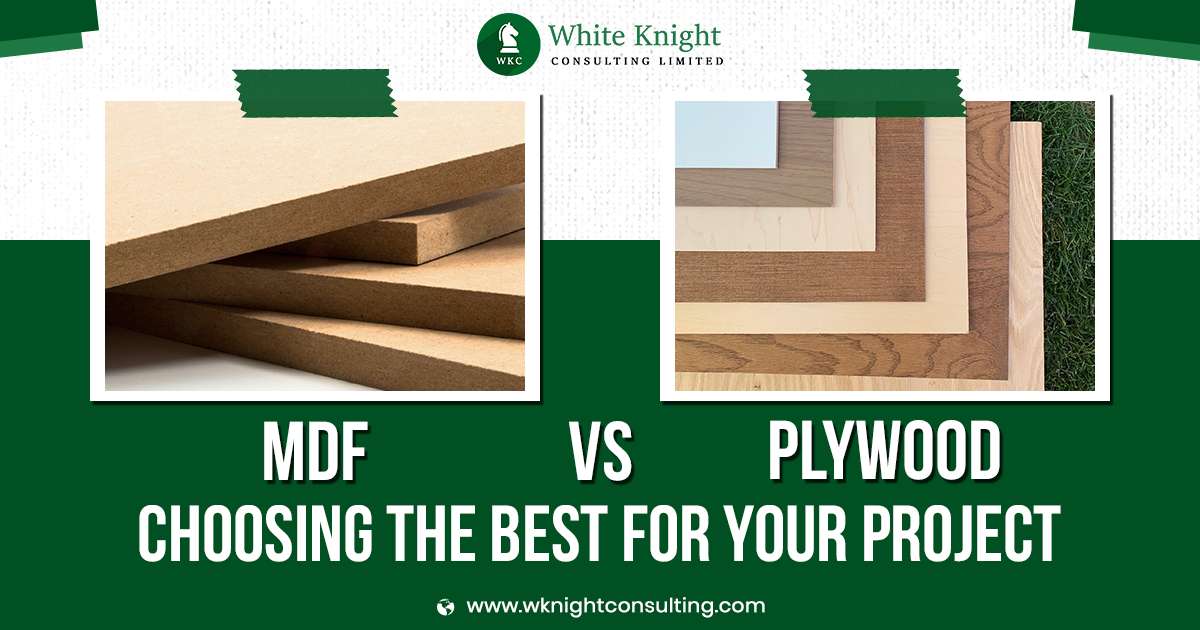
Three-quarter-inch birch or oak plywood is a top choice for long desks because it is flat, affordable, and less prone to warping than solid wood. For spans over 8 feet, upgrade to 1-inch thickness or add reinforcement underneath. Apply iron-on edge banding or glue 1×2 solid wood trim to finish edges. Sand starting with 120 grit, then move to 220 grit before applying sanding sealer and your chosen finish.
Choose MDF for a Smooth Paint Finish
Three-quarter to 1-inch MDF delivers a perfectly flat, paint-ready surface ideal for modern minimalist desks. The tradeoff is weight and moisture sensitivity. A 4×8 sheet weighs approximately 100 pounds, and the material absorbs moisture easily. Seal all sides and edges with primer or polyurethane before use to prevent damage.
Build with Solid Wood Planks
Use 1×8 or 2×8 pine, oak, or walnut boards glued edge-to-edge for a warm natural look. Store boards flat for 48 hours before assembly to prevent warping. Attach a one-half-inch backing board underneath to stop the top from bowing over time.
Try a Pre-Made Countertop
Butcher block or kitchen countertops from IKEA, Home Depot, or salvage yards save significant time. Sizes like 3m x 1m (approximately 118 x 39 inches) work well for long desks. These options come pre-sanded and flat, though they can weigh up to 440 pounds and may need cutting to fit your space.
Design a Sturdy Support Frame
Add a Center Spine for Long Spans
For desks longer than 6 feet, install a vertical center spine running down the middle under the desktop. Make it three-quarter-inch thick and 29 to 30 inches tall. Screw through leg panels into the spine for mounting, but do not glue if you might need to disassemble the desk later.
Install Face Boards for Edge Strength
Glue and screw one-and-a-half-inch or three-and-a-half-inch thick face boards to the front and sides of the desktop. These boards reinforce edges, hide support beams, and improve overall appearance. Use mitered corners for a seamless professional look.
Use Cross-Bracing to Prevent Flex
Attach 2×2 or 2×4 lumber every 16 to 24 inches beneath the desktop, running perpendicular to the grain. Screw through the frame into the desktop to create a rigid structure that resists flexing during use.
Install a Backing Board on Plank Tops
Glue and nail a one-half-inch plywood strip, 24 inches wide and full desk length, to the underside of glued-up planks. This prevents the top from bowing over time. Space nails every 6 to 8 inches for secure attachment.
Pick the Best Legs and Base
Use Pipe Legs for Industrial Style
Black iron or galvanized steel pipes with floor flanges create strong, low-cost legs. Expect to pay approximately $40 for a full set. You will need a drill, spade bit for flange holes, and a wrench for assembly. Build to 28 to 30 inches tall.
Mount Hairpin Legs for Minimalist Look
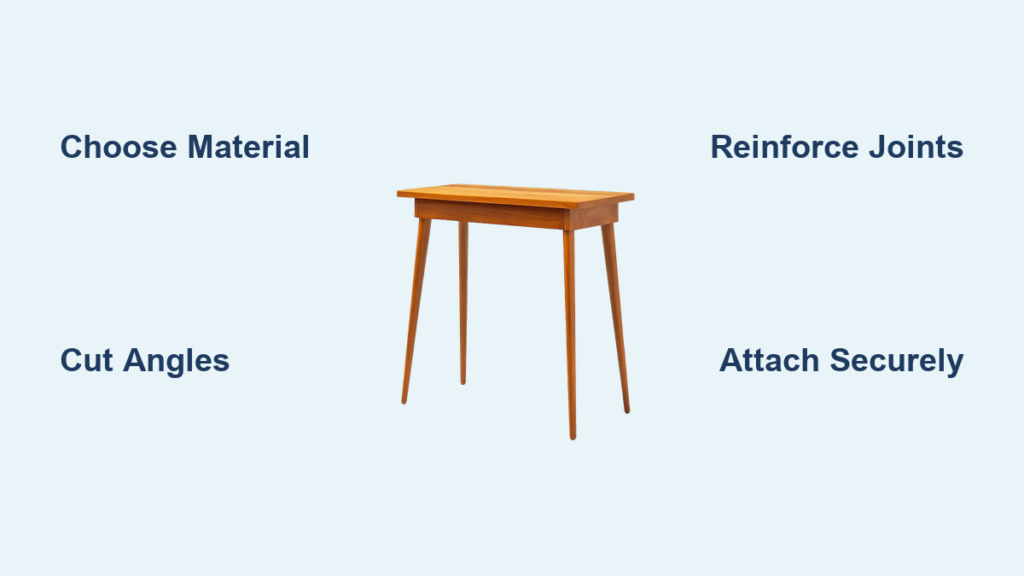
Hairpin legs work best for light to medium desks with a full support frame. Standard height ranges from 28 to 30 inches. Use 4 to 6 legs for long desks, adding a center leg for spans over 72 inches.
Build Trestle or Sawhorse Bases for Heavy Loads
Trestle or sawhorse bases with A-frame or X-frame designs work ideal for 8-foot-plus desks or heavy use like gaming and crafting. Use 2×4 or 4×4 lumber for strong lateral and vertical support.
Repurpose IKEA BESTA Units as a Base
Three BESTA cabinets (25 and one-quarter inches tall, 15 and one-half inches deep) with legs create a 29 and one-quarter inch high base. This approach provides built-in storage and modular flexibility. Space units with 32-inch gaps for dual users.
Add a Center Leg for Extra Support
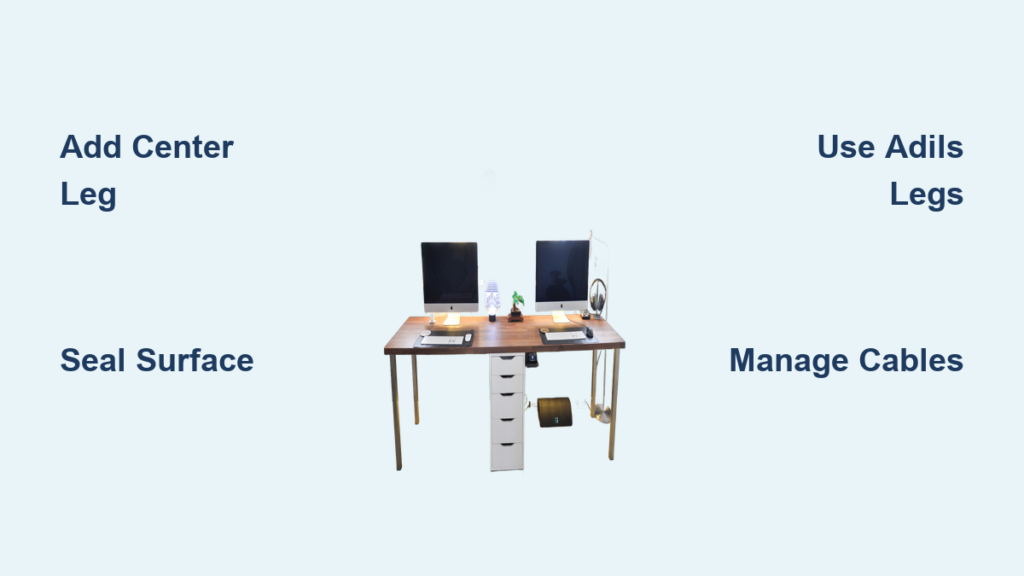
Any desk over 6 feet should have a center leg, pedestal, or support beam to prevent sagging. Options include a full leg, L-bracket, or vertical spine placed at the center of the span, typically under the highest-use area.
Assemble the Desk Frame
Glue and Clamp Planks for a Solid Wood Top
Arrange boards on a flat surface and apply wood glue to edges. Clamp tightly across the width, wipe excess glue, and let dry for 24 hours. Sand flush if needed before continuing assembly.
Attach the Backing Board
Position the one-half-inch plywood backing across the glued planks. Secure with glue and brad nails every 6 to 8 inches. Let dry completely before flipping the assembled top.
Install Connector Bars for Multi-Board Tops
Use metal connector bars to pull boards tightly together. Lay boards side-by-side and screw bars into edges at ends and mid-spans. Tighten to eliminate any gaps between boards.
Mount Face Boards and Center Spine
Attach the center spine first by screwing through leg panels. Then glue and screw face boards to front and sides. Use L-brackets at corners for extra support where needed.
Prepare and Finish the Surface
Sand in Progressive Grits
Start with 60 to 80 grit to remove imperfections, move to 120 grit for smoothness, and finish with 220 grit before applying stain or paint. Lightly sand between coats using 320 grit.
Fill Gaps and Repair Flaws
Use wood filler for nail holes, dents, or small gaps. For plywood edges, apply sanding sealer before painting to create an even surface.
Apply Edge Banding to Plywood
Cut iron-on edge banding to length and iron on using a clothes iron with parchment paper. Trim excess with a utility knife and sand smooth.
Condition Softwood Before Staining
Pine and other softwoods blotch easily, so always apply wood conditioner 5 to 10 minutes before staining. Use a foam brush or rag for even application and wipe off excess after 5 to 15 minutes.
Apply a Durable Topcoat
Use polyurethane for long-lasting protection. Apply 4 thin coats and sand lightly between each. Water-based options dry fast with low odor, while oil-based versions offer durability with an amber tint. Satin finish provides a professional look.
Warning: Danish or tung oil-soaked rags can spontaneously combust. Store them in a metal container with water after use.
Mount the Desktop
Position the Base
Place legs, trestles, or cabinets on a level floor. Use a level to check each support point and adjust with shims if the floor is uneven.
Secure the Top
Align the desktop with the base and attach with L-brackets (2 to 3 per side) or mounting screws. Use screws rather than glue if disassembly might be needed later.
Drill Cable Management Holes
Use a spade bit or hole saw (1 to 2 inches diameter) to drill holes near center or user zones. Add grommets for a clean finished appearance.
Prevent Sagging and Wobble
Limit Unsupported Spans
Never leave more than 6 feet without central support. Use center legs, pedestals, trestle bases, or cross-bracing to maintain stability across long spans.
Reinforce Weak Points
Add metal corner braces at joints. Use thicker face boards (three and one-half inches instead of one and one-half inches). Install apron framing around the perimeter for additional rigidity.
Test for Flatness
After assembly, place a 4-foot level across the surface in multiple directions. Shim or adjust supports if needed to achieve a perfectly flat work surface.
Save Money and Time on Your Build
Use Pre-Cut Countertops
Skip the glue-up process entirely by buying a ready-made butcher block or laminate top. Sources include IKEA, Home Depot, and salvage yards. Costs range from $150 to $600 but save hours of work.
Buy Reclaimed Materials
Look for old bed frames (solid wood planks), discarded cabinets or doors, and used pipe legs or filing cabinets. These materials often cost far less while adding character.
Use In-Store Cutting
Many hardware stores cut boards or panels for free. This avoids needing a table saw and ensures straight, accurate cuts.
Skip Complex Joinery
Use butt joints with glue and screws instead of dovetails or mortise-and-tenon joints. This approach is faster and strong enough for desks. Hide joints with face boards or trim.
Maintain and Upgrade Your Desk
Seal Against Moisture
Reapply polyurethane every few years to maintain protection. Use felt pads under drinks or heavy items to prevent surface damage.
Tighten Hardware Annually
Check and re-tighten screws, brackets, and leg bolts once a year to maintain structural integrity over time.
Add Functional Upgrades
Consider casters to make the desk mobile. Add a keyboard tray to free up surface space. Install a monitor arm to improve ergonomics. Attach LED lighting for under-desk illumination.
Frequently Asked Questions About Building a Large Desk
What is the best material for a large desk top?
Plywood (three-quarter-inch birch or oak) offers the best balance of cost, stability, and warp resistance for large desks. MDF works well for painted finishes, while solid wood provides premium aesthetics but requires more maintenance.
How do I prevent a large desk from sagging?
Limit unsupported spans to 6 feet or less by adding a center leg, pedestal, or vertical spine. Use cross-bracing, backing boards, and thick face boards to reinforce the structure.
What height should a large desk be?
Standard desk height ranges from 29 to 30 inches from floor to desktop. Adjust slightly based on your seated elbow height for optimal ergonomics.
Can I use IKEA cabinets as a desk base?
Yes, IKEA BESTA units work excellently as desk bases. Three units (25 and one-quarter inches tall with legs) create a 29 and one-quarter inch high base with built-in storage.
How much does it cost to build a large desk yourself?
DIY costs range from $90 for basic builds to $500 for premium materials and finishes. This saves 90 percent or more compared to custom furniture.
Do I need special tools to build a large desk?
Essential tools include a drill, circular saw or miter saw, clamps, level, and measuring tape. In-store cutting services at hardware stores can replace the need for a table saw.
Key Takeaways for Building a Large Desk
Building a large desk is a rewarding DIY project that combines function, strength, and design at a fraction of the cost of store-bought alternatives. Choose the right materials based on your budget and aesthetic preferences, prioritizing structural integrity for spans over 6 feet. Use center spines, cross-bracing, and proper leg support to prevent sagging and wobble over time. Apply a durable finish like polyurethane to protect your investment, and plan for cable management during assembly. Whether you are a beginner using a pre-made top and pipe legs or an advanced builder gluing a solid wood surface, the principles of stability, flatness, and ergonomics remain the same. Start with a solid plan, follow the steps carefully, and enjoy your custom large desk for years to come.