You’re not stuck with a wobbly, cracked, or broken desk. Whether it’s an IKEA flat-pack that gave out after one too many moves or a sturdy wooden workhorse with a loose leg, most damage can be fixed fast, affordably, and without replacing the whole thing. The key is knowing what kind of damage you have and which fix actually holds up.
This guide cuts through the noise. No fluff, no generic advice. You’ll learn how to diagnose structural failure, choose the right fix for particleboard versus solid wood, and reinforce joints so they last. We cover everything from gluing shattered laminate to installing industrial-grade threaded inserts.
Diagnose the Damage Before You Repair
Grabbing glue or screws without knowing what’s broken leads to wasted time and weak repairs. A cracked surface needs a different approach than a wobbly leg or stripped hole. Take two minutes to inspect first.
Check for Wobble and Movement
Rock the desk side to side and front to back.
Slight wobble usually means loose screws or minor joint separation. Loud creaking or a swinging leg points to stripped holes or broken mounting blocks. If the top flexes under hand pressure, you’re looking at structural failure in particleboard or MDF.
Use a level on the desktop to detect warping. An uneven surface often indicates moisture damage or poor support underneath.
Inspect All Fasteners and Joints
Flip the desk over and look for spinning screws, which are a classic sign of stripped particleboard. Check for gaps in joints where glue has failed or dowels have broken. Look for cracked or missing blocks, which are common in flat-pack legs. Pry up any hidden plastic caps, typically 3/8 inch, to find cam locks or screws you might have missed.
Also inspect drawer slides. Sticking or misalignment often stems from loose mounting screws, not the slide itself.
Identify Your Desk Material
Your repair method depends entirely on what the desk is made of.
| Material | Repair Outlook |
|---|---|
| Particleboard / MDF | Poor screw grip. Repairs work short-term; reinforcement needed. |
| Plywood | Better than particleboard. Edges chip but hold screws well. |
| Solid Wood | Best for repair. Glue, dowels, and screws hold strong. |
| Laminate | Surface scratches fixable. Deep cracks require replacement. |
| Metal | Dents repairable. Loose welds need brackets or bolts. |
If it’s a budget flat-pack, assume lower repair longevity. But even these can be saved with the right upgrades.
Repair a Shattered or Cracked Desktop

A cracked desktop looks bad and compromises strength. Particleboard and MDF shatter easily and swell with moisture. Here’s how to fix it or know when to quit.
Glue It Back Together
This works only for clean breaks in solid wood or thick plywood. It won’t hold on shattered particleboard.
Apply wood glue to both broken edges. Press pieces together firmly and clamp with bar clamps or heavy books. Wipe excess glue immediately. Wait 24 hours before unclamping. Sand smooth with 120-grit followed by 220-grit paper.
Warning: Super glue is too brittle. It might seal the crack but won’t resist stress. Use it only for tiny surface fixes.
Hide the Crack with Color and Polish
For cosmetic fixes when the structure is stable, sand the crack flat. Remove all dust with a dry cloth. Color the sanded area with a permanent marker or wax pencil matching your desk color. Seal with clear nail polish to restore shine and protect the repair.
Pro Tip: Test your color match on a hidden edge first. Layer lightly and build up gradually.
Turn Damage into Art with Epoxy
If you’re creative, make the crack a feature instead of a flaw. Mix epoxy resin with gold, silver, or copper pigment. Fill the crack with a putty knife, smooth it out, and let cure for 24 hours. The result is a striking, durable repair that turns failure into design.
Replace the Desktop Instead
If the top is shattered, swollen, or delaminated, replacement is smarter than patching.
A new IKEA-style top costs about $20. Used desk tops run $10 to $30 at Goodwill or on Facebook Marketplace. You can often find free ones on Freecycle.org or Buy Nothing groups.
Replacement is faster than patching, more durable, and avoids weak glue lines. One teen replaced a broken IKEA desk top with a secondhand unit, saved money, avoided a lecture, and got a stronger desk.
Fix Loose or Broken Desk Legs
Wobbly legs are the number one desk complaint. The fix isn’t just tightening screws. It’s restoring grip in stripped holes and reinforcing weak joints.
Glue and Clamp the Joint
Best for solid wood legs with loose tenons or mounting blocks. Remove the leg if possible. Scrape off old glue with a chisel. Apply wood glue to both mating surfaces. Reinsert and clamp for 24 hours.
This doesn’t work well on particleboard because the material crumbles.
Use Pocket Screws for Hidden Strength
Best for reattaching legs via mounting block. You’ll need a pocket hole jig, #8 or #10 wood screws 1.5 to 2 inches long, and clamps.
Clamp the block to the desk. Drill pocket holes from the underside into the block. Drive screws to secure. The fasteners stay hidden from view, resist lateral movement, and allow future disassembly if needed.
Move Screws to Fresh Wood
When holes are stripped, don’t reuse them. Shift screws half an inch forward or backward into virgin wood.
Keep screws at least 1.5 times the screw diameter from any edge. Use three screws per side to spread the load evenly.
Pro Tip: Dynamic forces like sliding your chair pull legs forward. Align new screws to resist that motion.
Fill Stripped Holes with Dowels
Best for restoring screw grip in particleboard or softwood. Drill out the old hole. Coat a wooden dowel in wood glue and insert it. Cut it flush with a saw or chisel. Redrill a new pilot hole at the original location.
Now the screw bites into solid wood instead of crumbling particleboard.
Install Threaded Inserts for Permanent Fixes
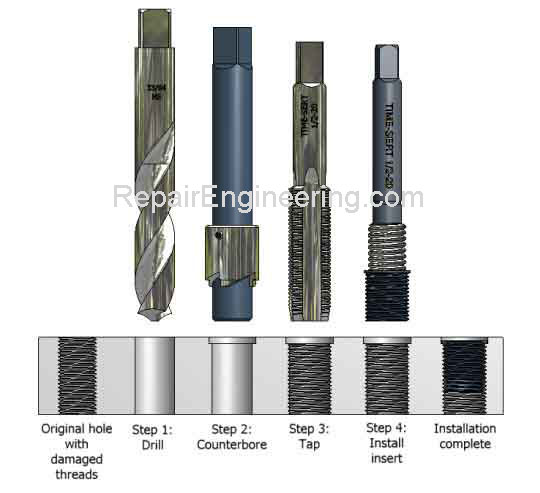
Best for heavy desks, frequent disassembly, or repeated failures. These brass or steel inserts have internal machine threads.
Drill a hole slightly larger than the insert. Screw or tap it in with a hex key. Use a machine bolt to attach the leg.
Benefits include no more stripping, the ability to remove and reinstall hundreds of times, and stronger connection than wood screws.
Upgrade: Use lock nuts under the desk for vibration resistance.
Bolt, Washer, and Nut Assembly
For maximum durability on standing desks or heavy loads, go industrial. Drill through the desktop and mounting block. Countersink so the bolt head sits flush. Insert the bolt with a washer and secure with a lock nut underneath.
The load is carried by the bolt, not the wood. Hardware stays hidden when drawers are installed. This survives daily use.
Repair Dowel and Cam Lock Systems
Flat-pack desks use dowels and Euro-screws, also called cam locks, for alignment and stability.
Fix Broken or Missing Dowels
If a dowel snapped, drill it out with a 6mm or 10mm bit. Apply wood glue to a new dowel. Tap it in and let cure for 24 hours.
Replace Damaged Cam Locks
Cam locks fail when the plastic cam breaks or spins freely. Buy a Euro-screw replacement kit online or at hardware stores. Install the new cam and screw. During reassembly, rotate the cam 90 degrees to lock it in place.
Pro Tip: Apply a drop of thread locker to prevent loosening over time.
Fix Water-Damaged or Swollen Surfaces
MDF and particleboard swell when wet. You can fix minor damage, but severe swelling means replacement.
Dry the area completely using fans or dehumidifiers for 2 to 3 days. Scrape off bubbled laminate with a utility knife. Flatten lifted areas by injecting wood glue underneath, then clamp with wax paper as a barrier. Fill with epoxy-based wood filler and sand smooth. Refinish with paint or apply a new laminate patch.
No fix works for major swelling. Replace the panel.
Fix Scratches, Dents, and Discoloration
For Minor Scratches
Use a touch-up marker, wax pencil, or crayon that matches the finish. Buff with a soft cloth.
For Deep Scratches and Dents
Clean and lightly sand with 220-grit paper. Apply wood filler to the imperfection. Dry and sand flush. Stain to match, testing first. Seal with polyurethane.
For UV Fading or Chemical Discoloration
Sand the entire surface for even tone. Refinish with paint or clear coat.
Fix Sticking or Broken Drawers
Pull out the drawer. Clean tracks with a dry cloth. Lubricate with silicone spray or paraffin wax, never oil. Tighten screws on both the drawer and cabinet side. Realign using micro-adjustment screws on ball-bearing slides.
Upgrade to ball-bearing slides, $8 to $12 per pair, for smoother action. For warped drawers, clamp flat and dry. Reinforce corners with L-brackets.
Reinforce Weak Frames
Wobbly side frames or cracked supports need structural help.
Add Threaded Inserts
Drill into frame members. Install brass inserts. Use long screws for superior grip.
Use L-Brackets or Z-Brackets
Install at weak joints like the center crossbar. Use 1.5-inch screws, long enough to anchor but short enough to avoid piercing surfaces.
Pro Tip: Apply wood glue before installing brackets for extra rigidity.
Combine Methods for Maximum Strength
Use threaded inserts on one side and L-brackets on the other. Double reinforcement means zero wobble.
When to Repair Versus Replace
Repair if the damage is minor or cosmetic, the desk is made of solid wood or plywood, it has sentimental or aesthetic value, or the fix is low-cost and you have the tools.
Replace if the particleboard is swollen or shattered, the frame is cracked or unstable, repairs keep failing, or the desk no longer fits your needs for size, height, or ergonomics.
Rule of thumb: If repair cost exceeds $30 and the desk is particleboard, just replace it.
Prevent Future Damage
Tighten hardware every 6 months. Screws loosen over time. Use coasters and desk pads to block spills and scratches. Avoid overloading, especially cantilevered shelves. Keep humidity at 40 to 60 percent to prevent swelling. Upgrade to solid wood or steel for long-term durability.
Paint or Refinish an Old Desk
Yes, you can paint over laminate or MDF. Sand with 120 to 150 grit to dull the surface. Clean with TSP or degreaser. Prime with bonding primer for laminate or oil-based primer for MDF. Paint with latex or chalk paint. Seal with polycrylic.
Bold colors, stencils, and two-tone designs are popular trends right now.
Final Expert Tips for Desk Repair
Combine glue plus screws plus brackets for the strongest repairs. Use threaded inserts on any desk you move often. Document your fixes, noting what you upgraded, in case you need to disassemble later. Upgrade hardware while repairing, don’t just replace with the same weak screws.
Frequently Asked Questions About Fixing a Broken Desk
Can I fix a swollen MDF desk surface?
Yes. Scrape off the bubbled area, dry completely, apply wood filler or epoxy, sand smooth, and repaint. For extensive damage, replacement is more effective.
How can I fix scrapes on my desk quickly?
Use a furniture touch-up pen or wax stick. For deeper damage, apply wood filler, sand, and refinish.
How can I strengthen a wobbly desk?
Tighten all screws, fill stripped holes with wood glue and toothpicks, add L-brackets, and reinforce joints with threaded inserts.
Should I fix a cheap computer desk?
Only if repair is simple and inexpensive. Particleboard desks degrade over time and may not support repeated fixes. Replacement is often more cost-effective.
Can I paint over an old wooden desk?
Yes. Sand, clean, prime, paint, and seal with a protective topcoat.
Do standing desks last longer?
Electric or manual sit-stand desks with steel frames and solid desktops offer better durability and ergonomics. However, motorized components can fail and require maintenance.
Key Takeaways for Fixing Your Broken Desk
Most broken desks can be fixed, but how you fix it determines how long it lasts. Skip the weak glue-and-screw band-aid. Use dowels, inserts, and bolts to build strength. Or replace the top and keep the frame. Either way, you’ll save money, reduce waste, and get a desk that works without starting over.
The most important steps are diagnosing the damage first, matching your repair method to the material type, and upgrading hardware when you fix it. Particleboard desks are rarely worth extensive repair. Solid wood and plywood respond well to glue, dowels, and mechanical fasteners. For wobbly legs, threaded inserts or bolt assemblies beat screws every time.