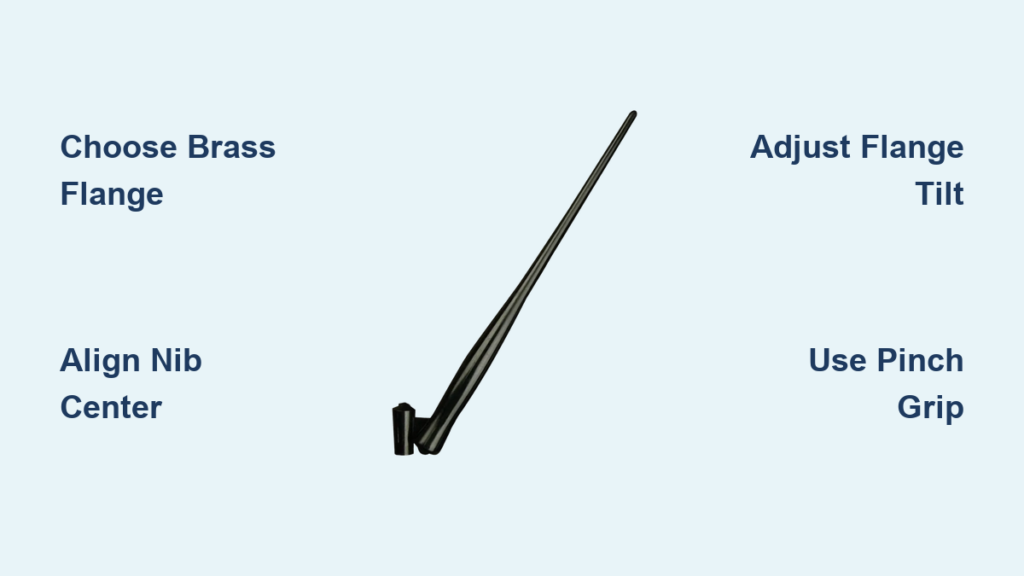
If hand fatigue or inconsistent slant has been sabotaging your Copperplate or Spencerian practice, learning how to use an oblique pen holder could transform your calligraphy. This specialized tool features a brass flange that angles the nib so your hand moves naturally across the page while maintaining a precise 55-degree slant. No more awkward paper rotation or wrist strain. Many calligraphers call it a game-changer the moment they try it. In this guide, you’ll discover how to pick the right holder, insert and adjust your nib, master the perfect grip, and write with control and confidence.
Select the Right Oblique Pen Holder for Your Needs

Choosing the right tool sets the foundation for everything else. Not all oblique holders perform equally, and the wrong one can create more problems than it solves.
Choose Brass Over Plastic for Lasting Performance
When shopping for an oblique pen holder, brass flanges are essential while plastic ones should be avoided entirely. Plastic flanges come mass-produced with fixed angles that cannot be adjusted. They often position the nib off-center, creating imbalance during writing. They wear quickly, fail to hold nibs securely, and frequently cause the nib to catch on paper, which leads to ink spatter and frustration.
Brass flanges, by contrast, deliver durability, adjustability, and rust resistance. Their flexibility allows precise tuning of angle, tilt, and fit, ensuring the nib aligns perfectly with the pen’s centerline. This alignment matters because it produces balanced pressure and smooth writing. While brass pens cost more upfront, they last longer and adapt to your personal style.
Match Flange to Nib Size for a Secure Fit
Not every nib fits every oblique holder. The shank thickness at the base of the nib varies between models. The Brause Rose and EF66 have very thin shanks, while the Nikko G runs significantly thicker. A flange sized for one will not properly fit another without adjustment.
If the fit is too tight, you risk damaging the nib. If too loose, the nib wobbles and ruins stroke consistency. The cleanest solution is to dedicate one pen per nib type, keeping a separate holder for your Nikko G and another for your Brause Rose. This eliminates constant readjustment and preserves the flange’s integrity. Alternatively, universal oblique pens with screw-adjustable flanges (priced around $50 to $60) allow you to widen or narrow the opening, though they lack the fine-tuning capability of standard brass flanges adjusted with pliers.
Know When to Use Straight vs. Oblique Pens
The oblique pen holder excels for right-leaning scripts like Copperplate or Spencerian, where a consistent 55-degree slant is crucial. But it is not universal. For vertical scripts such as Amy Style or certain Gothic hands, a straight pen is superior. The oblique’s built-in angle offers no benefit and can actually interfere with creating perfectly upright strokes.
In freehand lettering or illustration, where angles change frequently, a straight pen offers more versatility. Left-handed writers typically do not need an oblique, since their natural hand movement already favors the correct slant. However, about 10% of lefties who hook their wrist or strain during writing may benefit from a left-handed oblique. If you are unsure, test different nibs on a straight pen first, then commit to an oblique once you have identified your preferred nib and script style.
Insert and Adjust the Nib in Your Oblique Pen Holder
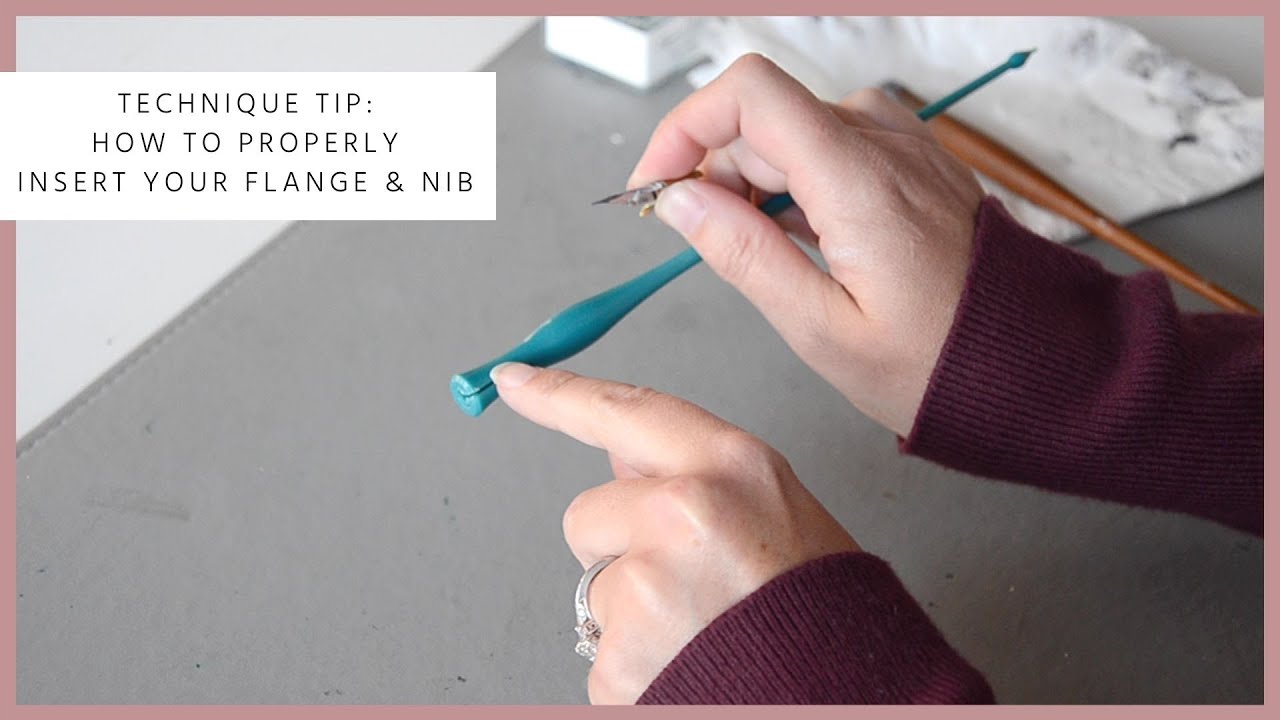
Proper setup makes the difference between a frustrating experience and smooth, confident writing.
Gather Essential Tools Before You Begin
Before inserting a nib, prepare three key tools: a small flat-head screwdriver, jeweler’s pliers, and a protective cloth or paper towel. The screwdriver (often from an eyeglass repair kit) gently pries open the flange. Jeweler’s pliers allow precise tightening or bending without damaging the brass. The cloth protects your fingers from sharp nib tips during handling.
Having these tools on hand ensures safe, accurate adjustments and prevents frustration. Never force a nib into a flange, as this can bend the shank or crack the brass. With the right tools, you can achieve a snug, centered fit that lasts.
Insert the Nib Correctly in Your Oblique Pen Holder
Start by securing the pen holder. Press your thumb on top of the barrel to prevent the center piece from popping out. Insert the screwdriver tip into the flange opening and gently twist to widen the gap just enough for the nib shank. Using the cloth, slide the nib base into the flange, wiggling slightly to help it seat.
Push the nib in until its tip aligns with the centerline of the barrel, which is critical for balance. If the nib feels loose, use the pliers to gently squeeze the flange. If too tight, expand it slightly with the screwdriver. Test for wobble: a properly secured nib should feel firm and stable. Avoid over-tightening, which can deform the brass and make future adjustments difficult.
Adjust the Flange Tilt for Smooth Pressure Control
The tilt of the flange affects how easily the tines spread. A lower tilt (closer to the paper) reduces resistance, making it easier to create thick downstrokes with less pressure. This setting is ideal for beginners. A steeper tilt increases resistance, producing naturally thinner strokes but requiring more force for shading.
To adjust, use your fingers or pliers to gently bend the flange up or down. Start with a lower angle to develop control, then experiment as your pressure technique improves. If the nib catches on paper or blobs ink, the angle may be too low. Raise it slightly. Always test on paper after adjustments to fine-tune performance.
Fine-Tune the Inward Cant for Better Flex

The inward cant refers to the flange’s horizontal curve. A flat cant offers more resistance. A slightly inward bend allows better flex and tine control, reducing the effort needed to open the nib. Adjust the cant by gently bending the flange inward with pliers.
However, never compromise center alignment. The nib tip must stay on the barrel’s center axis. If the flange pushes the nib off-center, the pen will feel unbalanced. Rotate or reposition the flange as needed to ensure even pressure on both tines. This step is crucial for clean, consistent strokes and prevents one tine from wearing faster than the other.
Master the Correct Grip on Your Oblique Pen Holder
Even a perfectly adjusted pen fails without the right grip. Your hand position determines control, comfort, and stroke quality.
Try the Traditional Grip for a Classic Feel
The traditional grip places your index finger on top of the barrel and your thumb just above or on the flange edge. The remaining fingers curl underneath for support. This grip offers a classic feel and is preferred by many purists. However, it may be uncomfortable for those with long thumbnails or larger hands.
The key is to keep your grip close to the flange, not higher up the barrel, so you maintain precise control over the nib’s angle and pressure. Avoid death-gripping. Hold the pen as you would a pencil, with relaxed fingers. This minimizes fatigue and allows for smooth, fluid motion.
Use the Lindsy Bugby Pinch Grip for Superior Control
An increasingly popular alternative is the Lindsy Bugby method, also known as the pinch grip. Here, your index finger rests on the right side of the barrel, and your thumb presses directly on the flange. The other fingers support the pen from below.
This grip provides superior control, especially for adjusting flange angle mid-stroke, and reduces hand strain during long writing sessions. Many users find it more intuitive and comfortable than the traditional method. It also positions the hand slightly to the side, improving visibility of the writing line, a major advantage over straight pens.
Find Your Ideal Hand Position Through Experimentation
There is no single correct grip. What matters is comfort, stability, and control. Experiment with finger placement, grip height, and pressure to discover what works for you. Some writers hold the pen further back; others prefer a forward grip.
The only non-negotiable rule: grip next to the flange. This ensures maximum responsiveness and prevents the pen from feeling unwieldy. Rest your palm lightly on the paper for stability, but do not lean your body weight onto your writing hand. Let your arm and shoulder guide the motion, not just your wrist. This promotes even pressure and reduces fatigue during extended practice.
Write with Proper Technique Using Your Oblique Pen Holder

Setup and grip matter, but technique brings everything together on the page.
Align Paper and Nib Correctly for Clean Strokes
With an oblique pen holder, keep your paper upright. Excessive rotation defeats its purpose. The flange is designed to eliminate the need for extreme angles. Instead, focus on nib direction: the tip should always point toward the upper edge of the paper. For slanted scripts, aim toward the upper right corner.
Never point the nib leftward. This prevents tines from spreading evenly and can damage the nib over time. If you need to change your writing angle, rotate the paper, not your hand or wrist. This maintains consistent stroke formation and leverages the oblique’s mechanical advantage.
Control Pressure for Beautiful Line Variation
Line thickness in calligraphy comes from pressure variation. Light pressure creates fine upstrokes. Increased pressure spreads the tines for bold downstrokes. The oblique’s design helps distribute pressure evenly across both tines, but if one side is consistently thicker, check your flange rotation and nib alignment.
The resistance you feel depends on the flange’s tilt. A lower angle makes shading easier but risks ink blobs. A steeper angle requires more force but gives finer control. Practice gentle, incremental pressure. Start light and build gradually. This builds muscle memory and prevents nib damage from over-flexing.
Manage Ink Flow Effectively During Practice
Dipping an oblique pen can be tricky due to the protruding flange. Avoid narrow-necked ink jars. Use wide containers, decant ink into a shallow dish, or apply ink with a dropper or brush. This prevents the flange from touching the jar and ensures a clean dip.
For best results, use Indian ink, which is waterproof and ideal for layering with watercolor. After dipping, gently tap the nib on the jar’s rim to remove excess ink. Too much leads to blobs; too little causes skipping. The oblique’s side-mounted hand position allows a lower nib angle, improving ink flow control compared to straight pens where hand placement can obstruct the angle.
Maintain Your Oblique Pen Holder Properly
A well-cared-for brass oblique pen can last decades. A neglected one corrodes and fails within months.
Clean Without Submerging the Flange
Never soak the oblique pen holder, especially the flange. Brass corrodes when exposed to moisture, and trapped water can cause rust or verdigris (green corrosion), which stains paper and weakens the metal.
Instead, clean only the nib and reservoir. Wipe the nib with a damp cloth or paper towel after each use. If needed, swish just the tip in water, never letting water reach the flange. Immediately dry with a soft cloth. For ink buildup in the flange, use a dry cotton swab. Regular spot cleaning keeps your pen functional and extends its life.
Store Your Oblique Pen Holder to Prevent Damage
Store your pen in a dry, low-humidity environment to prevent tarnishing. Keep it upright in a cup with the nib down, or remove the nib and store it separately. Leaving the nib in the holder between uses is acceptable and helps prevent loss, but frequent swapping weakens the flange over time.
If you use multiple nibs regularly, dedicated holders are better than constant changing. Keep tools nearby so adjustments are easy. A well-maintained brass oblique pen can last decades, making proper storage a long-term investment.
Troubleshoot Common Issues Quickly
Here are quick fixes for frequent problems:
- Nib catches on paper? Lower the flange tilt toward the paper.
- Uneven strokes? Rotate the flange until both tines press evenly.
- Loose nib? Gently squeeze the flange with pliers. Do not over-tighten.
- Ink blobs? Raise the flange angle slightly or reduce pressure.
- Corrosion? Wipe with a brass cleaner, but focus on prevention through dry storage.
If the flange loosens over time, re-tighten it as needed. With care, your oblique pen holder will remain a reliable companion for all your calligraphy projects.
Frequently Asked Questions About Oblique Pen Holders
What Is the Main Purpose of an Oblique Pen Holder?
An oblique pen holder is designed primarily for right-handed writers to create consistent, right-leaning scripts like Copperplate or Spencerian without requiring extreme paper rotation. The flange angles the nib at approximately 55 degrees, allowing the writer to keep the paper upright while the nib automatically aligns with the writing slant. This reduces fatigue and improves visibility of the writing line.
Why Should I Avoid Plastic Oblique Pen Holders?
Plastic flanges are mass-produced with fixed angles that cannot be adjusted. They often position the nib off-center, creating imbalance. They wear quickly, fail to hold nibs securely, and frequently cause the nib to catch on paper. Brass flanges offer adjustability, durability, and rust resistance, making them the superior choice for serious calligraphy work.
Can Left-Handed Writers Use an Oblique Pen Holder?
Most left-handed calligraphers use straight pens successfully because their natural hand movement already favors the correct slant. However, approximately 10% of left-handed writers, especially those who hook their wrist or strain during writing, may benefit from a left-handed oblique or even a standard right-handed oblique. Testing different setups helps determine personal preference.
How Do I Know If My Flange Angle Needs Adjustment?
If the nib catches on paper or produces ink blobs, the flange angle is likely too low. Raise it slightly. If strokes feel stiff and require excessive pressure for shading, the angle may be too steep. Lower it toward the paper. Always test on scrap paper after each adjustment to find the sweet spot for your writing style.
How Often Should I Clean My Oblique Pen Holder?
Wipe the nib with a damp cloth after every use to prevent ink buildup. Dry the flange immediately if it gets wet. Deep cleaning is rarely needed if you maintain this routine. Regular spot cleaning prevents corrosion and keeps your pen performing smoothly for years.
Is One Oblique Pen Holder Enough for Multiple Nibs?
Not usually. Each flange is sized for specific shank thicknesses, so a flange fitted for a thin Brause Rose will not securely hold a thicker Nikko G. The most reliable solution is owning separate holders for each frequently used nib. Alternatively, universal oblique pens with adjustable flanges allow switching between nib sizes, though they sacrifice some fine-tuning capability.
Key Takeaways for Mastering Your Oblique Pen Holder
Learning how to use an oblique pen holder comes down to three core principles. First, choose quality equipment: a brass flange matched to your preferred nib size delivers the adjustability and durability that plastic alternatives cannot. Second, invest time in proper setup and grip: aligning the nib on the centerline, adjusting tilt and cant, and gripping close to the flange transforms the writing experience from awkward to effortless. Third, maintain your pen with dry storage and careful cleaning to ensure decades of reliable performance.
Your next step is simple. Pick one nib you already love, purchase a brass oblique pen holder fitted for that nib, and spend 15 minutes daily adjusting the flange and practicing basic strokes. Within a week, you will notice reduced fatigue and more consistent slant. Within a month, the oblique pen will feel like a natural extension of your hand, letting you focus on the art rather than the mechanics.