You’ve purchased a beautiful butcher block slab ready to become your new home office desk. But raw wood won’t survive daily typing, coffee spills, and computer equipment without proper protection. Without the right finish, your desk can stain, warp, or wear out within months.
This guide covers every step from sanding and staining to sealing and curing. You’ll learn which finishes work best for desk use, how to apply them correctly, and how to maintain your desk for years of reliable service.
Sand and Prep the Butcher Block Surface
Proper sanding creates the foundation for a smooth, durable finish. Start with coarse grit paper and work toward finer grits for best results.
Sand Through Progressive Grits
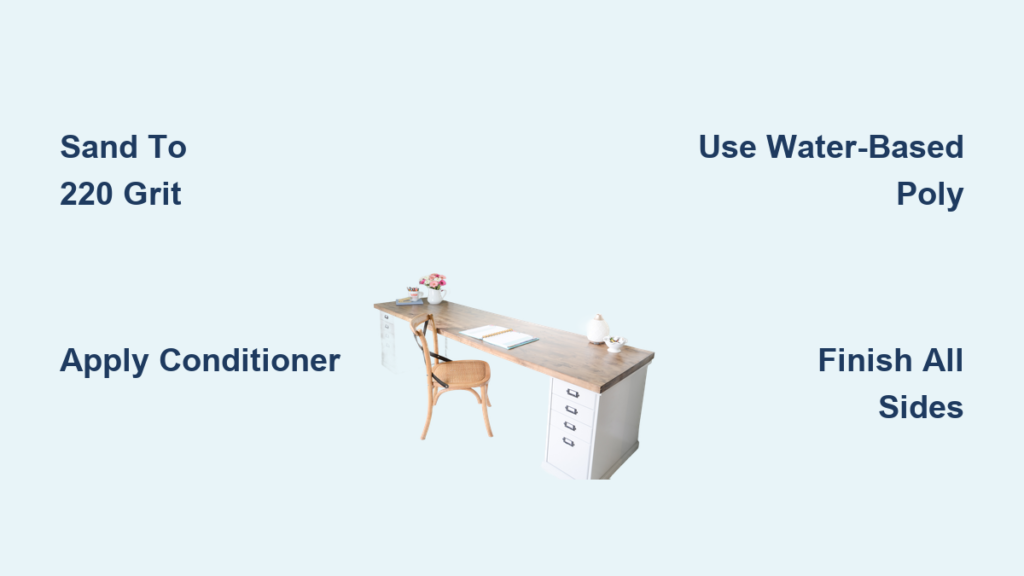
Begin with 120 to 150 grit sandpaper to remove mill marks and imperfections. Progress to 220 grit for a silky-smooth surface that accepts finish evenly. Always sand with the grain direction to avoid scratches that show through the final finish.
After sanding, wipe the entire surface with a lint-free cloth or tack cloth. Remove all dust from the top, bottom, and edges before moving to the next step.
Clean All Dust Before Finishing
Any remaining particles create bumps or reduce adhesion in the final finish. A thorough wipe-down prevents frustrating imperfections in your completed desk.
Apply Wood Conditioner Before Staining
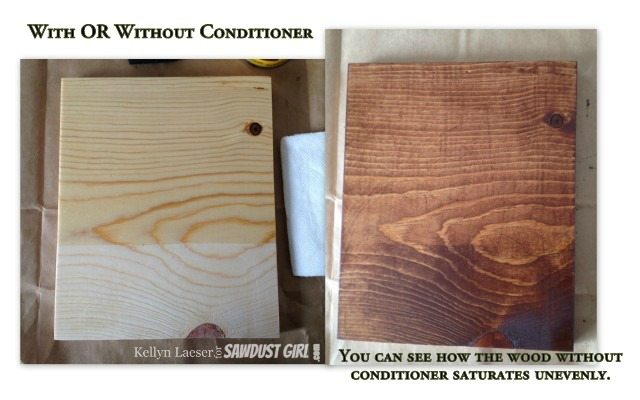
Wood conditioner prevents blotchy, uneven stain absorption on porous or soft woods like birch and rubberwood.
How to Apply Conditioner
Shake the conditioner well, then apply evenly with a sponge or rag to all surfaces. Let it sit for 2 to 5 minutes, then wipe off the excess. Allow 20 minutes of drying time before staining.
This step is optional if you prefer the natural wood color, but it makes a significant difference for even stain coverage.
Stain the Wood for Rich Color
Staining enhances grain definition and helps your desk match your workspace decor. This step is completely optional.
Choose Your Stain Color
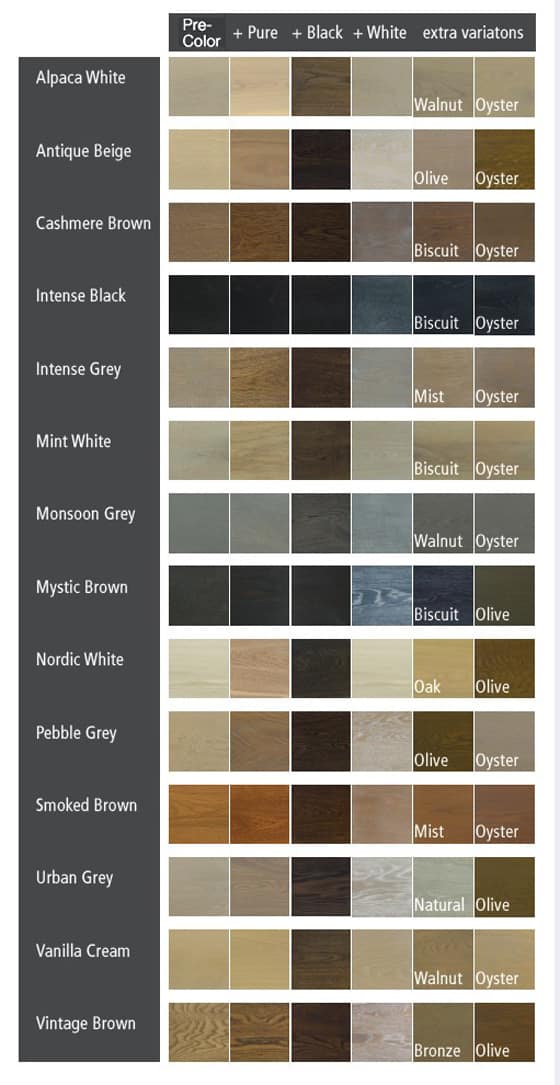
Popular choices include espresso for rich warmth, Minwax Natural for brightening without darkening, or Duraseal Natural for a linseed oil-based option that enhances without building film.
Apply stain with a staining pad or clean rag working in the grain direction. Wipe off excess immediately to prevent pooling. One coat is usually sufficient, but wait 24 hours before assessing whether a second coat is needed.
Let Stain Dry Completely
Allow a minimum of 24 hours of drying time before applying any finish. Rushing this step causes poor adhesion, bubbling, or cloudiness in the topcoat.
Choose the Best Finish for Your Desk
Selecting the right product matters more than application technique. Here’s how the main options compare.
Water-Based Polyurethane
Water-based polyurethane offers the best balance of safety, clarity, and durability for most desk users. It resists UV yellowing, has low odor, and cleans up easily with water.
General Finishes High Performance Water-Based Poly is the top recommendation. It comes in satin or semi-gloss, withstands daily office use, and handles easily for beginners. Apply 3 to 4 thin coats, sanding lightly between each with 220-grit sandpaper.
Rubio Monocoat for Natural Look
Rubio Monocoat provides a food-safe, plant-based finish that feels like bare wood. It dries in about 1 day, requires no sanding between coats, and repairs seamlessly. Simply wipe on, wait 15 minutes, and wipe off all excess.
This premium option costs more but suits eco-conscious users who want easy spot repairs and very low VOCs.
Skip Mineral Oil for Desk Use
Mineral oil requires weekly reapplication and offers no real protection against scratches or water damage. Save it for cutting boards.
Apply Finish Correctly for Maximum Protection
Application technique determines whether your finish looks professional or amateur.
Use Thin Coats with Proper Tools
Stir polyurethane gently without shaking to avoid bubbles. Apply thin, even coats with a foam brush or lambswool applicator pad, working with the grain. Cover the top, bottom, and all edges to prevent warping.
Thick coats cause drips, bubbles, and extended drying times. Less is more.
Sand Lightly Between Coats
After each coat dries for 4 to 6 hours, lightly scuff sand with 220-grit sandpaper. This ensures proper adhesion for the next coat. Remove all dust with a tack cloth before continuing.
Apply 3 to 4 coats minimum for adequate protection on a desk surface.
Finish All Sides to Prevent Warping
Never skip the bottom and edges. Finishing only the top creates moisture imbalance that leads to cupping or warping over time.
Apply the first coat to the bottom, then flip and immediately coat the top. Finish edges in subsequent coats. Store the curing desk vertically or on edge to allow airflow and prevent sticking.
Let the Finish Cure Before Heavy Use
Understanding the difference between dry and cured protects your investment.
Cure Times Vary by Product
| Finish Type | Full Cure Time |
|---|---|
| Water-Based Poly | 21 to 30 days |
| Rubio Monocoat | Hardens over weeks |
| Tung Oil | 5 to 7 days per coat |
| Watco Lacquer | 24 to 48 hours |
A finish may feel dry in hours but remain vulnerable to dents and scratches until fully cured. Light daytime use is acceptable during cure, but avoid leaving heavy or warm objects like monitors or laptops overnight.
Drill Hardware Holes Before Finishing
If your desk needs cable grommets, monitor arm mounts, or leg attachments, drill these holes before applying finish.
Use Pilot Holes
Pilot holes prevent splitting, especially near edges. After drilling, clean out all dust and proceed with finishing. Consider wood plugs or decorative caps for unused holes.
Maintain Your Finished Butcher Block Desk
Proper care extends the life of your finish significantly.
Clean With Damp Cloth Only
Wipe the surface with a damp microfiber cloth and dry immediately. Never let water sit on the finish. Avoid abrasive cleaners, ammonia-based products, and paper towels that can scratch.
Reapply Only When Needed
Quality finishes last 5 to 10 years with normal use. Water-based polyurethane typically needs full re-coating every 5 to 10 years. Rubio Monocoat allows simple spot treatment for scratches. Oil finishes require reapplication every 6 to 12 months.
Consider a Glass Top for Extra Protection
A glass overlay provides maximum protection for high-traffic offices.
Benefits of Glass
Tempered glass prevents scratches, stains, and water damage while creating a perfectly smooth writing surface. It preserves the natural wood look underneath.
Order custom-cut 1/4-inch tempered glass and use clear plastic bumpers to elevate and secure it. This approach works especially well in shared workspaces or busy home offices.
Key Takeaways for Finishing Your Butcher Block Desk
Finishing a butcher block desk requires proper preparation, quality products, and patience. Sand to 220 grit and remove all dust before starting. Apply wood conditioner if staining porous wood species. Use 3 to 4 thin coats of General Finishes High Performance Water-Based Poly for the best combination of durability, clarity, and ease of application. Finish all sides including the bottom to prevent warping. Allow 21 to 30 days for full cure before heavy use.
Your butcher block desk can last decades with the right finish and minimal maintenance. The investment in proper application pays off in years of beautiful, functional workspace.
Frequently Asked Questions About Finishing Butcher Block for Desk
Can I use my desk while the finish is curing?
Light daytime use is acceptable during the cure period. Avoid leaving heavy objects like monitors or laptops on the surface overnight until fully cured.
Do I need to finish the bottom of my butcher block desk?
Yes. Finishing all sides prevents moisture imbalance that causes warping and cupping. Apply at least one coat to the bottom and edges.
What happens if I don’t use wood conditioner before staining?
Soft woods like birch and rubberwood absorb stain unevenly without conditioner, resulting in blotchy, patchy color that’s difficult to fix.
How long does water-based polyurethane take to cure?
Full cure takes 21 to 30 days. The surface may feel dry after 4 to 6 hours but remains vulnerable to damage until fully cured.
Is butcher block finish food safe?
All clear finishes are food safe once fully cured. However, desks don’t require food-safe finishes since they don’t contact food directly.
Can I repair scratches in my finish later?
Rubio Monocoat allows easy spot repairs that blend seamlessly. Water-based polyurethane requires scuff sanding the affected area before reapplying.