You’re not alone if you’ve punched a hole in your desk. Whether it happened during a moment of frustration, an accidental drill slip, or a monitor clamp that tightened too far, desk holes are surprisingly common. The good news? A hole in a desk can be fixed for under $20 with basic tools and the right method. But success depends entirely on your desk material and whether you need cosmetic hiding, structural strength, or both.
This guide walks you through proven methods to patch, reinforce, and conceal damage on any desk type. From quick cosmetic fills to load-bearing metal reinforcements, you’ll learn exactly which approach works for your situation.
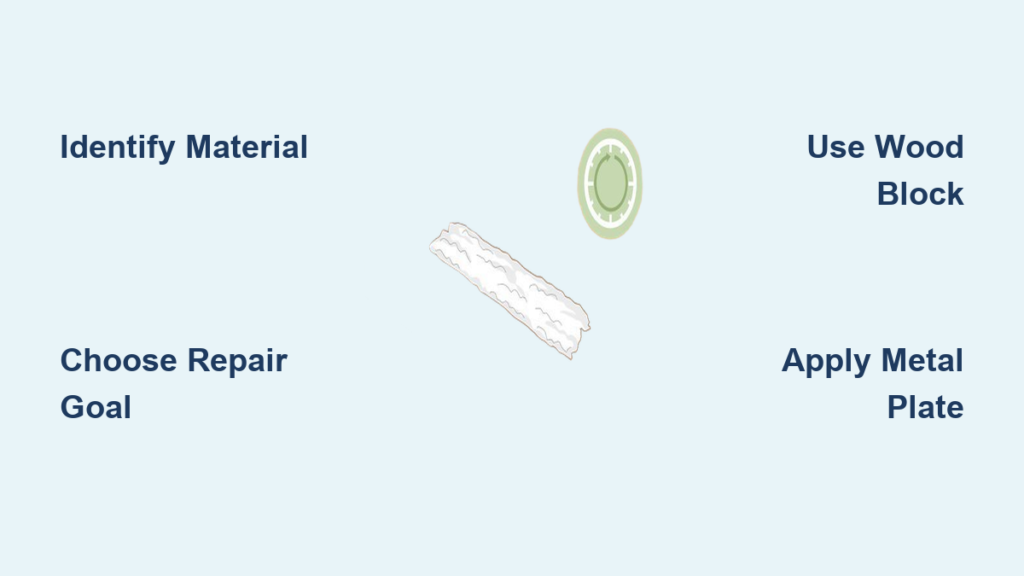
Identify Your Desk Material First

The repair method you choose must start with identifying what your desk is made of. This single factor determines whether your fix will be invisible, functional, or a waste of time.
MDF and Particleboard Desks
These engineered wood panels have smooth, uniform surfaces often covered in black or white laminate. The problem? They swell when exposed to moisture, and filler rarely bonds well. You can achieve a functional repair, but expect the patch to remain visible. These materials work poorly with stain, so painting becomes your only cosmetic option.
Solid Wood and Plywood Desks
If your desk shows visible grain patterns and feels heavier than expected, you have solid wood or plywood. These materials accept wood filler, epoxy, screws, and stain. You can sand and refinish the repaired area to where it nearly disappears. These are the best candidates for seamless fixes.
Hollow-Core Desks
Many affordable desks, including IKEA LINNMON models, use a cardboard honeycomb core sandwiched between thin wood layers. Poke the hole with a pen. If the material sinks inward, the core is crushed and offers no internal support. These require reinforcement methods, not just filler.
Choose Your Repair Goal
Before buying materials, decide what matters most to you. This choice shapes every decision that follows.
Cosmetic Repair: Hide the Hole
Choose this when the desk doesn’t support heavy equipment and appearance is your primary concern. You’ll use filler and paint to make the damage less obvious, though complete invisibility depends on your desk material. Laminate and MDF surfaces will still show some evidence of repair.
Structural Repair: Restore Strength
Choose this when the hole bears weight from a monitor arm, clamp, or other heavy equipment. Strength matters more than looks here. You’ll need reinforcement beyond simple filler to prevent the hole from failing again under load.
Fill and Paint Method for Cosmetic Fixes
This approach works best on solid wood and plywood desks where you can sand and refinish the surface.
Best Fillers for Your Desk Type
Epoxy putty like Milliput offers excellent adhesion and sands smoothly. It works well for irregular holes and cures in 15 to 30 minutes. Bondo automotive body filler sets even faster, sands exceptionally smooth, and handles large holes effectively. Wood filler works for shallow holes in solid wood but shrinks as it dries, requiring multiple applications.
Step-by-Step Fill Process
Clean the hole thoroughly first. Scrape out loose debris with a utility knife, then vacuum or wipe with a dry cloth. If the hole goes completely through the desk, stuff cardboard, foam, or wood scraps behind it to support the filler. Otherwise, the filler will simply sink into the void.
Apply your chosen filler with a putty knife. Overfill slightly since most fillers shrink as they cure. Let it dry completely according to package instructions. Sand smooth using 120-grit paper first, then finish with 220-grit. Wipe away dust with a tack cloth.
Match your paint color by scraping a chip from the desk and taking it to the hardware store for custom matching. Spray paint applies more evenly than brush-on paint. Seal with polyurethane to match the desk sheen.
Internal Wood Block for Hollow-Core Desks
Hollow-core desks need more than filler. The internal cardboard honeycomb provides no structural support, so you must create your own internal bracing.
Required Materials
You need a solid wood block at least ¾ inch thick and larger than the hole by 1 to 2 inches. Grab wood glue rated for outdoor use, clamps, a utility knife, and optionally screws.
Installation Steps
Enlarge the hole to a clean rectangle if it’s irregular. This makes fitting the block much easier. Cut your wood block so it’s 1 to 2 inches wider than the hole on all sides. Insert the block through the hole into the cavity inside the desk. Apply wood glue to all contact points between the block and the desk interior. Clamp firmly and let dry overnight.
Fill any remaining gap around the block edges with epoxy or Bondo. Once dry, sand flush with the desk surface, then prime and paint to match.
External Metal Plate for Heavy Loads
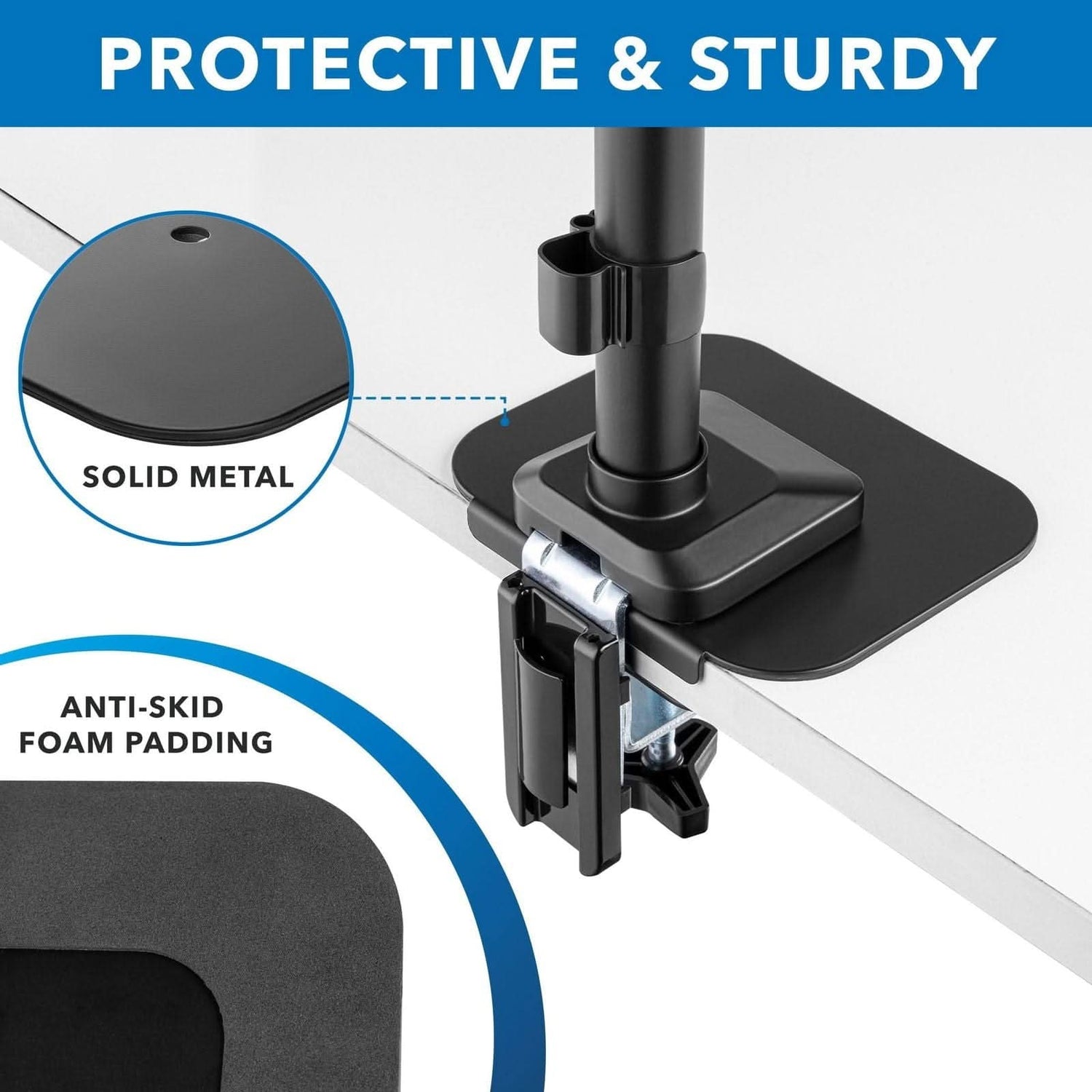
When a monitor arm or desk clamp creates recurring stress on a hole, a metal plate spreads the load across a wider area and prevents future damage.
Materials Needed
Get a piece of 14-gauge steel or 10-gauge aluminum at least 8 by 16 inches. You’ll also need slow-cure epoxy, sandpaper in coarse and fine grits, and clamps.
Application Process
Sand both the desk surface and the metal plate with coarse sandpaper to create a rough texture for better epoxy bonding. Mix slow-cure epoxy according to package directions. Apply a thin layer to both surfaces. Press the metal plate firmly onto the desk. Clamp in place and let cure for 2 to 4 hours. Trim any excess epoxy with a utility knife once partially set.
The metal plate turns a weak point into the strongest area of your desk. This method works especially well for standing desk converters and heavy monitor arms.
Decorative Metal Ring for Monitor Mounts
Sometimes you can turn a flaw into a feature. A decorative metal reinforcement makes a hole look intentional rather than repaired.
Use an aluminum cake pan with a removable bottom. Remove the circular base and bend the edges to form a ring that grips the desk thickness. Slide the ring over the hole. Spray paint it black or a matching color. Reattach your monitor clamp through the ring for a functional and stylish solution.
Quick Cover-Ups Without Repair
If your desk is cheap or the hole sits in an unobtrusive location, concealment might make more sense than repair.
A large desk mat or mousepad covers small holes instantly. Adhesive vinyl wraps come in various colors and textures. If the desk has an undamaged bottom side that looks identical, you might simply flip the entire tabletop. Rotate the desk so the hole faces a wall or gets hidden by equipment.
These options work well for renters or temporary situations where you don’t want permanent modifications.
When Replacement Makes More Sense
Sometimes repair costs more than replacement. Consider a new top if your desk is made of cheap particleboard and heavily damaged, if repair would cost more than half the desk value, or if you want an upgrade anyway.
IKEA LINNMON tops cost around $30. A ¾-inch sanded plywood panel runs roughly $50 at most hardware stores. Transfer your existing legs to the new top for a nearly instant upgrade. Finish edges with iron-on banding or paint for a polished look.
Pro Techniques for Better Results
Raise Sunken Dents First
For solid wood desks with dents rather than through-holes, try raising the compressed fibers before filling. Place a damp cloth over the dent and press with a warm iron. The heat and moisture cause the fibers to swell back up. Let dry completely before applying filler. This technique works on dents but not on actual holes.
Use Dowel Plugs for Character
Enlarge the hole to ¼ inch or ½ inch. Apply wood glue and insert a stained dowel cut slightly long. Clamp until dry, then trim flush with a flush-cut saw. Sand and stain to match. The dowel adds rustic charm while providing strong structural support.
Mix Epoxy with Sawdust
Combine clear epoxy with fine sawdust collected from the same wood type. Press the mixture into the hole. The sawdust creates a natural grain appearance while the epoxy provides strong bonding. This technique works exceptionally well on solid wood desks.
Essential Tools and Materials Checklist
Having the right supplies before starting saves multiple trips to the store.
Stock up on epoxy putty for strong, moldable fills. Keep automotive body filler like Bondo for fast, sandable repairs. Have wood glue and wood filler for solid wood fixes. Grab sandpaper in 120-grit and 220-grit for smoothing. Get spray paint that matches your desk color. Keep clamps handy for holding everything in place during curing. Have a putty knife for applying filler and a utility knife for trimming edges.
Prevent Future Damage
Stop holes before they happen. Use monitor stands with wide bases to avoid point loads that crush desk surfaces. Add rubber or felt pads under heavy equipment. Consider upgrading from particleboard or MDF desks to plywood or solid wood for long-term durability.
Most importantly, address stress in healthier ways. Desk damage from frustration happens, and it’s worth examining why.
Frequently Asked Questions About Fixing a Hole in a Desk
Can I fix a hole in a laminate desk to make it invisible?
Laminate surfaces cannot be seamlessly repaired. The thin veneer layer doesn’t accept stain or blend with filler. Expect a functional repair with visible evidence. Paint offers the best cosmetic result, but expect some visibility.
How long does desk hole repair take?
Simple cosmetic repairs with Bondo or epoxy take 2 to 4 hours including drying time. Structural repairs requiring overnight glue cure time take closer to 24 hours. Plan for additional time if doing multiple filler layers or custom color matching.
Will my repaired desk hole support a monitor arm?
Only if you reinforce it properly. Filler alone won’t hold. Use internal wood blocks for hollow-core desks or external metal plates for heavy loads. Without reinforcement, monitor arms will pull through the repaired area.
What’s the cheapest way to fix a desk hole?
Wood filler and spray paint runs about $15 total. Bondo kits cost $10 to $20. For hollow-core desks, a wood block from a hardware store adds about $5 to $10. The absolute cheapest option is covering the hole with a desk mat.
Should I just replace my desk instead of repairing it?
Replace if the desk is cheap particleboard, the damage is extensive, or repair costs exceed half the replacement value. Repair if the desk is solid wood or plywood, has sentimental value, or you want to avoid waste.
Key Takeaways for Fixing Your Desk Hole
Desk material determines everything. Solid wood and plywood accept repairs beautifully. Laminate and MDF allow functional fixes but never look completely invisible. Hollow-core desks require reinforcement, not just filler.
Choose your approach based on the hole’s purpose. Cosmetic repairs use filler and paint. Structural repairs need internal blocks or external plates. Sometimes concealment or replacement makes more sense than repair.
The right materials matter. Bondo sands smoothly for painted surfaces. Epoxy putty handles moisture-prone areas. Wood filler works on stainable surfaces. Match your product to your desk and finish goals.
Own the mistake and improve your desk. Whether you patch it, reinforce it, or build a new top entirely, you’ve turned damage into a learning opportunity.