You’ve probably been told there is one “right” way to hold a pen, usually the classic tripod grip taught in elementary school. But what if you use four fingers and your writing is perfectly clear? Should you change?
The truth is, the best way to hold a pen is not about rigid rules or textbook diagrams. It is about finding a balance between comfort, control, and endurance. Research and occupational therapy experts agree that the ideal grip lets you write legibly for long periods without strain, pain, or fatigue. A grip that looks unusual is not necessarily wrong. If it works for you, it may be perfectly functional.
That said, some grips do lead to problems over time, including cramping, smudging, poor posture, and even long-term hand pain. The key is not copying a diagram but understanding how your hand moves, where tension builds, and how small adjustments can make writing easier and more sustainable. Whether you are a student taking notes, a professional signing documents, or someone relearning handwriting, this guide will show you how to find your optimal hold.
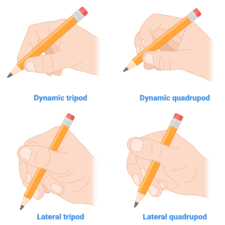
Tripod and Quadrupod Grips: The Two Most Effective Holds
Why the Tripod Grip Is the Recommended Standard
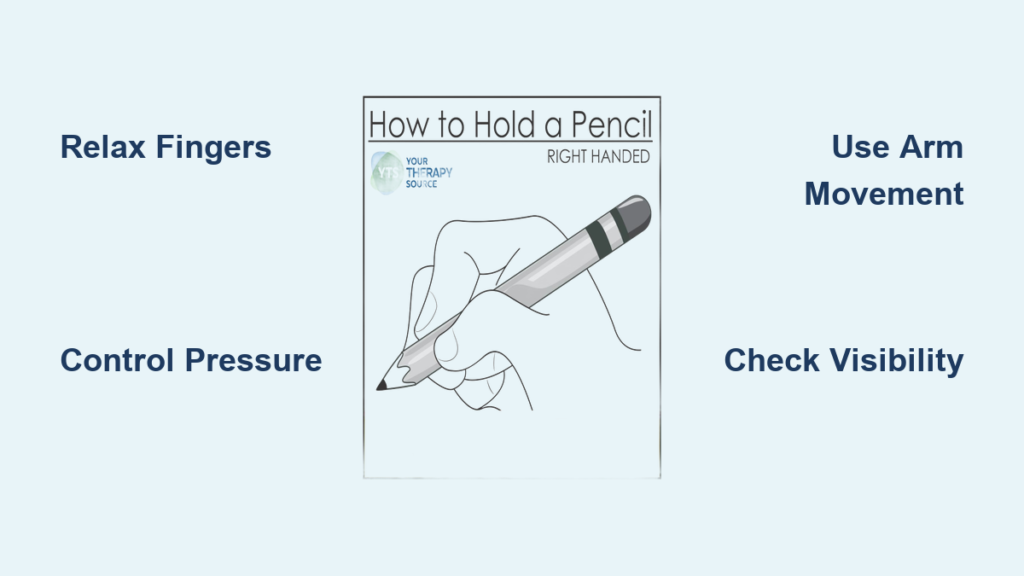
The tripod grip is widely considered the most efficient and ergonomic way to hold a pen. It uses three fingers to create a stable, balanced hold that supports precision and reduces fatigue.
- Thumb and index finger pinch the pen near the tip.
- Middle finger supports from underneath, forming a tripod base.
- Ring and little fingers curl gently into the palm for stability.
Hold the pen about one inch from the tip for optimal visibility and control. This position allows your fingers to guide the pen smoothly while keeping your hand relaxed. Avoid squeezing too tightly. Your knuckles should not turn white.
This grip works equally well for right- and left-handed writers. For left-handers, simply mirror the motion so the hand moves naturally across the page without smudging.
The Quadrupod Grip as a Valid Alternative
The quadrupod grip involves four fingers actively holding the pen, including the thumb, index, middle, and ring fingers, working together to stabilize the tool.
- Similar to the tripod but with the ring finger adding extra support beneath the pen.
- Often develops naturally in children or adults who find the three-finger grip unstable.
- Provides more surface contact, which can improve pressure control and consistency.
Despite using an extra finger, this grip is not inefficient or incorrect. Many people write clearly and comfortably this way. It becomes a concern only if it causes tension, pain, or limits movement.
Grips to Avoid for Better Writing Comfort
Some grips may seem secure but actually increase strain and reduce writing quality.
Cross Thumb Wrap
- The thumb wraps over the index finger to clamp down on the pen.
- Reduces space in the thumb web, limiting dexterity.
- Often leads to fatigue and poor fine motor control.
Palm Grip (Power Grip)
- The pen is buried deep in the palm with all fingers wrapped tightly around it.
- Common in certain cursive styles or among those with motor challenges.
- Causes rapid fatigue and limits finger mobility.
Claw Grip
- Fingers curl tightly under the pen, applying excessive downward pressure.
- Associated with hand cramps, poor posture, and inefficient movement.
These grips should only be corrected if they cause pain, fatigue, or legibility issues. If writing feels easy and sustainable, do not force a change just for appearance.
Specialized Grips for Art and Drawing

When writing gives way to sketching or shading, different grips unlock greater artistic expression.
Drumstick Grip for Loose, Expressive Marks
Hold the pencil like a drumstick between thumb and index, with other fingers stabilizing. This grip encourages movement from the shoulder rather than the wrist. It is ideal for loose, gestural lines and large compositions.
Paint Brush Grip for Delicate Detail
The pencil stands upright, resting in the crease between thumb and index finger. This position allows delicate, precise marks with the very tip. It is perfect for light sketching and visual comparisons.
Tip-Heavy Overhand Grip for Bold Coverage
The pencil lies flat against the page, held mid-shaft between middle finger and thumb. This grip uses the side of the tip for wide, forceful strokes. It works well for filling large areas quickly.
Inverted Grip for Unobstructed View
The pencil points back toward the body, resting on the forefinger and stabilized by thumb and lower fingers. This grip offers an unobstructed view of the mark being made, which is ideal for detailed work.
Artists often switch between these grips depending on the desired effect. Using only one grip limits creative range.
Fixing Tension and Fatigue for Pain-Free Writing
Why Relaxed Hand Writing Matters Most
The biggest cause of writing discomfort is not the grip type but excessive tension. Many people believe squeezing harder gives better control. In reality, it leads to:
- White knuckles
- Stiff, unresponsive fingers
- Rapid fatigue
- Hand cramps (writer’s cramp)
Practice writing with a soft, fluid hand. When you notice stiffness, pause, take a breath, consciously relax your fingers, and restart.
Pressure Awareness Exercises for Better Control
Too much pressure causes smudging and strain. Too little leads to faint, broken lines. Try these drills:
- Scribble Gradient: Start with dark, heavy strokes and gradually lighten until you are barely touching the paper. Reverse the process.
- Write in Light Grey: Use a pencil and aim for a consistent light grey tone. This trains you to apply minimal effective pressure.
- Use Feedback Tools: Pens like the Schneider Base Senso light up when you press too hard, giving real-time feedback. Note that the lid must not be placed on the pen for the light to function.
Arm Writing for Long Writing Sessions
For long writing sessions like exams, journaling, or note-taking, finger-driven writing wears out fast. Switch to arm writing, sometimes called the Palmer Method:
- Keep your hand relaxed and slightly elevated.
- Let the arm glide across the page using shoulder muscles.
- The hand acts as a pivot, often resting lightly on the side of the pinky.
This technique dramatically reduces fatigue and improves handwriting flow.
Handedness and Writing Mechanics
Right-Handed Writers
The hand moves naturally from left to right. Fingers wrap around the pen from the right side. Use the side of the hand as a pivot for smooth motion.
Left-Handed Writers
The hand approaches from the right side of the line. To avoid smudging, try tilting the paper clockwise and writing with a slight upward slant. Use fast-drying ink or gel pens to minimize smears. Mirror the tripod or quadrupod grip with the same mechanics in reverse direction.
Regardless of handedness, keep the wrist flexible, not bent at an extreme angle. Avoid “hooking” your wrist to see past your hand, as that strains the forearm.
Training Your Grip for Better Control
The Pinch, Flip, and Grip Technique
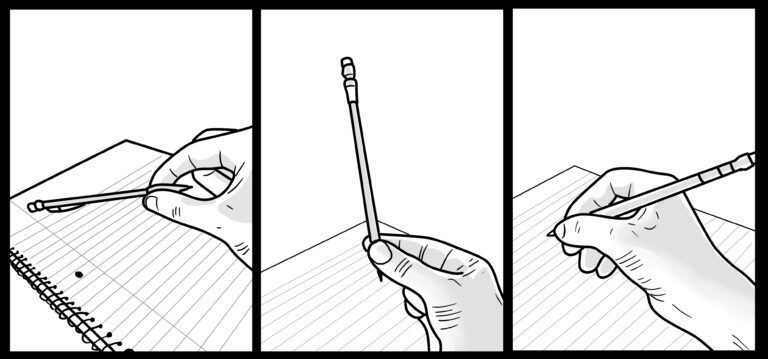
A simple method to establish the tripod grip:
- Pinch: Pick up the pen between thumb and index finger, like grabbing a grain of rice.
- Flip: Rotate your hand slightly so the pen swings into writing position.
- Grip: Let the pen rest on the middle finger for support.
This technique is especially helpful for children or adults retraining their hold.
Fine Motor Development Activities
Strong hand muscles support better grip control. Try these activities:
- Playdough shaping
- Bead stringing
- Tweezers or tongs games
- Tracing shapes and letters
These activities build the small muscles needed for precise pen control.
Pencil Grips and Textured Pens
Pencil grips made of silicone or rubber guide fingers into correct placement. Textured pens improve traction, reducing the need to squeeze tightly. Choose ergonomic pens with contoured barrels for natural finger alignment.
When to Change Your Grip
Not every non-standard grip needs fixing. Only intervene if you experience:
- Pain or cramping during or after writing
- Rapid fatigue that prevents writing for more than a few minutes
- Legibility problems caused by poor control
- A blocked view of the writing line
If none of these apply, your grip is likely functional, even if it looks different.
Common Myths About How to Hold a Pen
“There Is Only One Right Way”
False. Individual differences in hand size, strength, and coordination mean quadrupod and other grips are valid. Function matters more than form.
“Wrong Grip Ruins Handwriting”
Not necessarily. Many successful writers use non-standard grips. What matters is sustainability and comfort, not conformity.
“Grip Does Not Matter at All”
Misleading. Studies showing no link often test short writing bursts of around 14 minutes. In real-world use like exams or long notes, endurance and pain prevention depend heavily on grip efficiency.
Optimize Your Writing Setup for Better Results

Posture and Paper Position
Sit with feet flat and back supported. Angle the paper 30 to 45 degrees for natural hand movement. Avoid writing on soft surfaces. Use a hard-backed notebook or clipboard instead.
Wrist and Pivot Position
Keep your wrist slightly elevated, not pressed into the table. Allow the side of your hand to rest lightly on the page as a pivot point. This supports smooth, continuous strokes.
Visibility Check
Can you see what you are writing without twisting your wrist or leaning awkwardly? If not, adjust your pen angle, the position of the paper, or consider a low-profile grip or slimmer pen.
Frequently Asked Questions About the Best Way to Hold a Pen
Is the Tripod Grip Really the Best Way to Hold a Pen?
The tripod grip is widely recommended by occupational therapists because it balances control and endurance with low fatigue. However, it is not the only functional grip. The best way to hold a pen is whichever method lets you write comfortably, legibly, and without pain.
Can a Quadrupod Grip Cause Hand Problems?
A quadrupod grip is not inherently harmful. It becomes a concern only if it causes tension, cramping, or limits finger movement. Many writers use this grip successfully throughout their lives without issues.
How Do I Know If I Am Squeezing Too Hard?
Check your knuckles. If they turn white while writing, you are applying too much pressure. Other signs include rapid fatigue, smudged lines, and indentations on the paper. Practice the scribble gradient exercise to build pressure awareness.
What Is the Best Pen Grip for Left-Handed Writers?
Left-handers can use the same tripod or quadrupod grip as right-handers, simply mirrored. Tilting the paper clockwise and using fast-drying ink helps prevent smudging. The key is keeping the wrist flexible and avoiding a hooked position.
Should I Use a Pencil Grip Accessory?
Pencil grips can help children or adults retraining their hold. They physically guide fingers into proper placement. They are most useful as a temporary training tool rather than a permanent solution.
How Long Does It Take to Retrain My Grip?
Retraining varies by individual, but consistent practice over several weeks typically builds new habits. Short daily sessions focused on relaxation and proper finger placement tend to work better than long, infrequent practice.
Key Takeaways for Finding the Best Way to Hold a Pen
The best way to hold a pen is the one that lets you write comfortably, clearly, and without pain for as long as you need. The tripod grip is the preferred standard for its balance of efficiency and low fatigue. The quadrupod grip is a fully acceptable alternative if it feels stable and pain-free. Avoid the cross thumb wrap, palm grip, and claw grip if they cause strain. For art and drawing, switch grips to match the task.
The most important principles are simple. Minimize tension by keeping your fingers soft. Control pressure by writing with just enough force to leave a clear mark. Use arm movement for long writing sessions. Ensure clear visibility so you never block your view.
If your current grip works, keep it. If it causes discomfort or limits your writing, small changes like adjusting hold height, practicing relaxation, or using a pencil grip can make a big difference.
Start today. Write a sentence. Check your knuckles. Are they white? Relax. Breathe. Try again. That is the first step toward effortless, sustainable writing.