If you have invested in a sit-stand desk, you already understand that flexibility is the key to comfort and productivity. But once you start switching between sitting and standing, your old office chair probably will not cut it. The real question becomes: how to choose a chair for a standing desk that supports every position, from full sitting to perching to leaning, without sacrificing ergonomics or space.
The right seating solution is not just about comfort. It is about enabling movement, reducing fatigue, and supporting your body through hours of dynamic work. Many people assume a standard chair or a basic stool will do, but neither is optimized for the full range of motion a standing desk offers. A true standing desk chair bridges the gap, offering height, adjustability, and back support where it matters most.
Know the Chair vs. Stool Difference
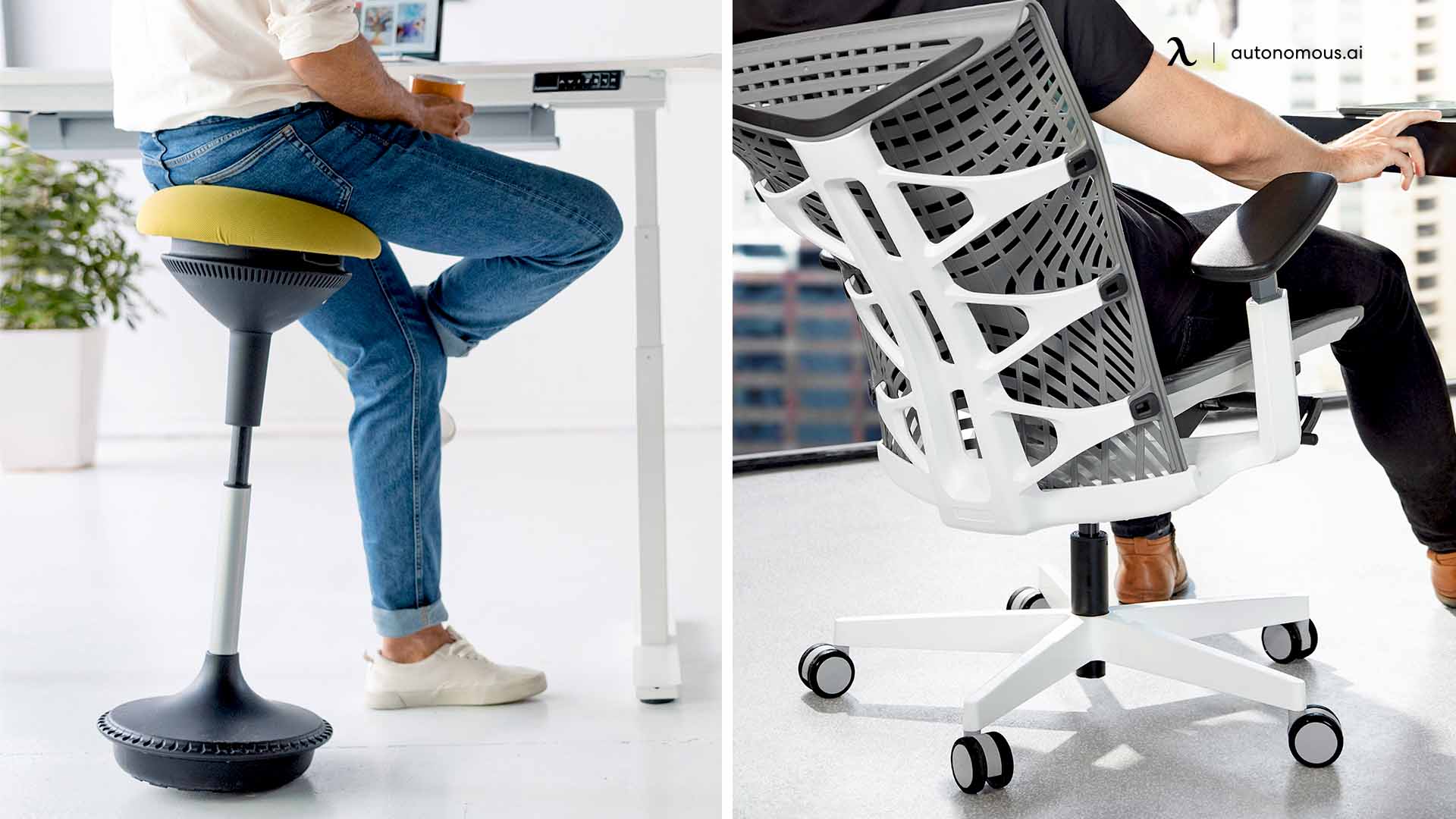
Before selecting a seat, understand the fundamental difference between a standing desk chair and a standing desk stool. Choosing the wrong type can undermine your entire ergonomic setup.
Standing Desk Stool: Minimalist Perching Support
A standing desk stool is designed for short breaks from standing, not sustained use. It typically has no backrest, limited height adjustment, a small footprint, and minimal padding or lumbar support. Stools work well if you are on your feet most of the day and only need to perch briefly. They are lightweight, easy to move, and ideal for creative or fast-paced environments where you are constantly shifting locations.
The catch is that a stool does not support your spine. During longer standing intervals, your lower back and hips take on all the load. Over time, this can lead to fatigue, poor posture, and chronic discomfort.
Standing Desk Chair: Full-Range Postural Support
A standing desk chair is built for dynamic workdays. It supports multiple positions including upright sitting, reclined lounging, active perching, and supported leaning. Key features include adjustable seat height up to 25 inches or more, a contoured supportive backrest, lumbar support that moves with you, and a tilt mechanism for forward or open-hip postures.
Unlike a stool, a standing desk chair remains useful whether your desk is up or down. When you are standing, you can lean into the backrest to relieve pressure on your knees and lower back while staying engaged at your workstation.
Pro Tip: If you switch positions more than three to four times per day, a standing desk chair will outperform a stool every time.
Match Your Chair to Your Work Habits
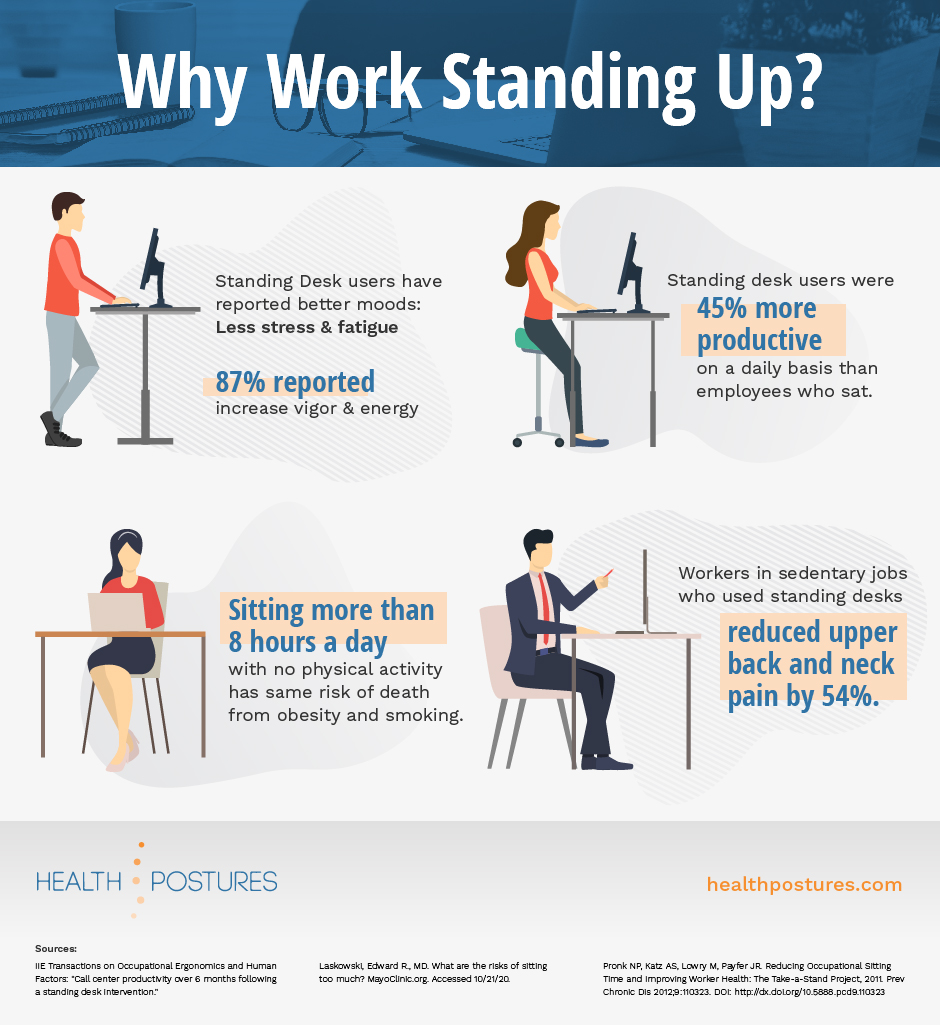
Your ideal chair depends less on trends and more on how you actually work. Here is how to choose based on your usage pattern.
You Stand Briefly: Choose a Compact Stool
If you stand for 10 to 20 minutes per hour, spend most of your day seated, and only raise your desk for quick stretches or calls, then a standing desk stool may be sufficient. You are not relying on the seat for support during long standing sessions. The stool gives you a place to perch without taking up desk space.
Best features to look for include height adjustability to match your standing desk, a swivel base for easy access, a foot ring for leg support, and a lightweight frame for mobility.
Warning: Do not use a stool as your only seat if you are sitting at a regular desk height. It will not support proper seated ergonomics.
You Switch Often: Invest in a Multi-Position Chair
If you alternate between sitting and standing every 30 to 60 minutes, work six or more hours per day, and want continuous back support, then you need a true standing desk chair. This type of chair moves with your workflow. Whether your desk is high or low, you stay supported. The backrest helps you maintain alignment during transitions and reduces strain when leaning during standing intervals.
The chair supports all-day use, encourages active sitting and standing, reduces joint pressure over time, and eliminates the need for multiple seats.
Expert Insight: Ergonomist Iris Sokol notes that leaning against a supportive backrest while standing activates core muscles without overloading the hips and knees, making it a smarter alternative to unsupported standing.
You Work Long Hours: Prioritize Adjustability and Support
If your workday stretches past eight hours, fatigue management is critical. A standard chair will not reach standing height. A stool will not support your spine. Only a fully adjustable standing desk chair can keep up.
Look for an extended height range of 18 to 26 inches to cover seated and perched positions, lumbar zone adjustment that tracks your lower back, a forward tilt function to open hip angle and engage core, a breathable contoured backrest for heat management and support, and a stable five-star base to prevent wobbling during leaning.
Real Benefit: A chair like the Newtral Standing Mate includes a built-in standing mat and reverse-tilt mode, letting you stretch your back mid-task without stepping away from your desk.
Key Features to Evaluate
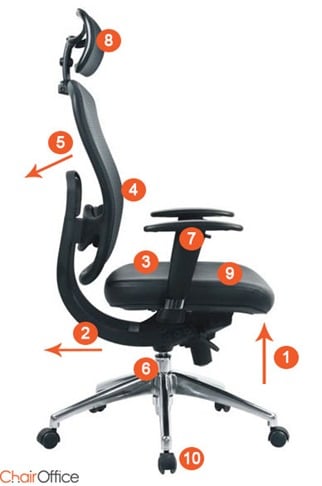
Not all standing desk chairs are created equal. Use this checklist to separate marketing hype from real ergonomic value.
1. Height Range: Does It Fit Your Desk
Most office chairs max out at 20 inches, but standing desks often require seat heights of 22 to 26 inches. Choose a chair with a pneumatic lift that extends to 26 inches or more. Confirm compatibility with your desk is lowest and highest settings.
Check This First: Use an ergonomic chair height calculator to determine your ideal seat height based on your height and desk dimensions.
2. Backrest Adjustability: Support at Every Angle
A fixed backrest fails when your posture changes. Look for a height-adjustable backrest so you can position lumbar support correctly, angle adjustment to recline or lean forward, and depth adjustment for torso length customization.
Pro Move: A backrest that supports a reverse open-hip position helps decompress your spine during long sessions.
3. Seat Design: Comfort Without Compromise
The seat should support perching without cutting off circulation. Ideal specs include a waterfall front edge to reduce thigh pressure, medium-firm cushioning, anti-slip fabric to stay in place during movement, and a minimum 16-inch depth for stability. Avoid flat hard seats. They are fine for five-minute perches but cause numbness over time.
4. Stability vs. Mobility: Find the Balance
Stools are light and mobile but wobble under off-center weight. Chairs are heavier and more stable, better for leaning. If you lean into the backrest frequently, prioritize stability. A five-star base with wide-spaced casters prevents tipping.
Fix This: Use floor-friendly casters on hard floors or felt pads to protect surfaces.
5. Foot Support: Do Not Ignore Your Base
Your legs matter as much as your back. A foot ring or footrest improves circulation, reduces lower back strain, and enhances balance when perching. Best if adjustable in height and angle and positioned under the seat, not dangling. Some chairs integrate a foot ring. Others require a separate add-on.
Avoid These Common Mistakes
Even with the right chair type, poor choices can ruin your setup.
Choosing Style Over Function
A sleek stool might look great in photos, but if it lacks a footring or lumbar support, it will not last through a full workday. Stick to ergonomic function first and aesthetics second.
Assuming All High Chairs Are Equal
High office chairs are not the same as standing desk chairs. Many only offer slightly elevated seats with no back support at standing height. Verify that the backrest remains effective when the seat is raised.
Skipping the Test Phase
Buying online without trying can lead to regret. If possible, test before you buy, or choose a brand with a 30-day trial.
Using One Seat for Two Desks
Trying to use a standing desk chair at a low traditional desk often results in poor posture. Either adjust your desk height or use separate seats, one for sitting and one for standing.
Space and Setup Considerations
Your workspace size influences your choice.
Small Office? Think Compact
Stools win for footprint, often less than 18 inches wide. They can tuck neatly under the desk and are ideal for shared or multi-use spaces. But if you work long hours, do not sacrifice support for space. Instead, look for slim-profile standing desk chairs designed for tight areas.
Large or Shared Workspace? Go Full-Function
With more room, you can prioritize full back support, leaning stability, and integrated footrests. Also consider dual seating, a stool for quick perching and a chair for deep work, but remember this takes up more floor space.
When to Use Both Chair and Stool
Some users successfully combine both. The stool serves for 10-minute standing breaks and quick tasks. The chair handles seated work and extended standing intervals. But unless you have the space and budget, a single high-performance standing desk chair usually covers both roles better.
Smart Alternative: Use a chair with a forward-tilt mode to mimic stool-like perching while keeping back support available.
Make the Right Choice for Your Body
Choosing a chair for a standing desk is not about following trends. It is about matching your seat to your movement. Ask yourself how many hours you work, how often you switch positions, and whether you feel lower back or leg fatigue by day end.
If you are standing for more than 30 minutes at a time, back support matters even when you are not fully sitting. A stool leaves your body to do all the work. A standing desk chair shares the load.
Bottom Line: For most full-time remote or hybrid workers, a standing desk chair with adjustable height and back support is the smarter, healthier investment.
Final Checklist: How to Choose the Right Chair
Before you buy, run through this quick evaluation.
| Feature | What to Look For |
|---|---|
| Height Range | 18 to 26 inches adjustable seat height |
| Backrest | Adjustable height, angle, and depth |
| Seat | Waterfall edge, medium firmness, anti-slip |
| Base | Five-star, stable, wide casters |
| Foot Support | Integrated footring or compatible with footrest |
| Tilt Function | Forward tilt for open-hip posture |
| Weight Capacity | Rated for your body weight |
| Trial Period | At least 30 days for testing |
Also ensure your standing desk moves smoothly between heights. A great chair is only as good as the desk it pairs with.
Frequently Asked Questions About Choosing a Chair for a Standing Desk
Can a standing desk stool replace an office chair?
For most desk workers, no. A stool covers the perching position but does not support seated work at standard desk height or provide lumbar support for longer sessions. It works best as a complement to a sit-stand setup rather than a full replacement for a seated chair.
Is a saddle seat the same as a standing desk stool?
Not exactly. A saddle seat has a distinctively shaped seat designed to tilt the pelvis forward and encourage an open hip angle, often used in medical or creative settings. A standing desk stool is a broader category that includes saddle-style seats but also covers flat or contoured seats without the saddle geometry.
Do I need back support at a standing desk?
It depends on how long you spend in any one position. For brief standing intervals, back support is less critical. For longer sessions, back support reduces the muscular load on the lower back and helps maintain posture without active effort. It also encourages core engagement during standing, which has its own benefit for back health over time.
Can I use both a stool and a chair at the same desk?
Yes, and some users do. A stool can serve as a quick perch for short transitions while a chair handles seated and longer standing sessions. In practice though, a purpose-built standing desk chair covers both scenarios on its own, which is the more space-efficient solution for most setups.
How do I determine the right seat height for my standing desk?
Finding the right seat height for your specific desk setup is worth doing before you buy. Use an ergonomic chair height calculator to work out your target range based on your height and desk dimensions. Most standing desk chairs should extend to 26 inches or higher to accommodate perching positions.
Key Takeaways for Choosing Your Standing Desk Chair
The best chair for a standing desk supports movement, not stillness. Whether you lean, perch, sit, or stand, your seat should help, not hinder, your body natural rhythm. Choose based on how you work, not how it looks in a catalog.
For most full-time workers, a standing desk chair with adjustable height and back support outperforms a stool because it handles the full range of postures throughout your day. A stool works for brief perching, but a chair shares the load during longer standing intervals and keeps your spine supported whether you are sitting or leaning.
Before you buy, verify the height range fits your desk, test the backrest adjustability, and prioritize stability if you tend to lean while working. With the right fit, you will sit less, stand smarter, and stay comfortable all day.