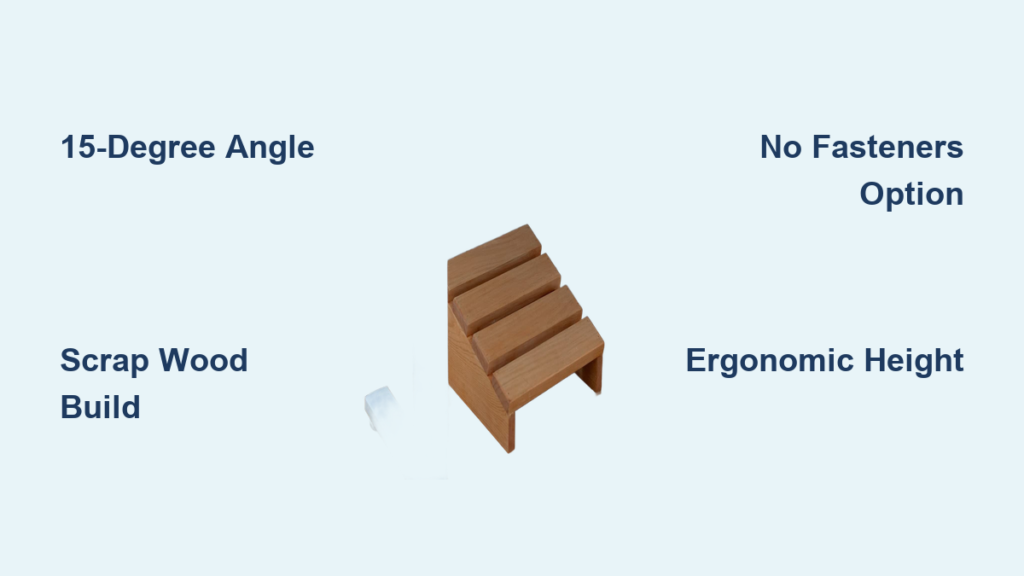
Sitting at a desk all day should not leave your feet dangling or your back aching. If you are wondering how to make a footrest for desk, you are in the right place. A custom wooden footrest solves poor posture, reduces fatigue, and boosts comfort, especially if you are under 5’8″ or using a standing desk converter. The best part? You can build one in under three hours using scrap wood and basic tools. This guide walks you through four proven methods, from power-tool precision builds to no-fastener options, so you can create an ergonomic, durable footrest tailored to your body and workspace.
Choose Your Footrest Design
Match Build to Tools and Skill
Not every DIYer has a full workshop. The key is picking a method that aligns with your tools, time, and comfort level. Here are the top four designs ranked by ease and customization.
Angular Side-Leg (Method A): Best for miter saw owners seeking a clean, stable build.
Box-Frame with L-Brackets (Method B): Ideal if you lack a saw and want to use hand tools only.
Curved Reclaimed Wood (Method C): For aesthetics and comfort using bed slats or pallet wood.
Adhesive Wedge (Method D): Fastest build with no screws, no nails, just glue and pressure.
Pro Tip: Start simple. Even a basic version improves posture. Upgrade later.
Set the Right Angle and Height
15 Degrees Is the Sweet Spot
The most effective footrests tilt between 10 and 25 degrees, with 15 degrees being ideal for most users 5’5″ to 5’9″. This angle supports a neutral spine and keeps knees slightly below hip level.
Front height: 2 to 4 inches
Rear height: 4 to 6 inches
Depth: 12 to 14 inches
Width: 12 to 16 inches
User Tip: Sit in your chair and measure from the floor to the back of your knee. Subtract seat height to find ideal footrest height.
Avoid Common Posture Mistakes
Feet propped too high causes knee strain. A flat platform encourages slouching. Too short means heels hang off the edge. Use a speed square or protractor to verify your cut angle before assembly.
Gather Materials and Tools
Use What You Have
You do not need new lumber. Many builds use 100% scrap wood and cost zero dollars.
Best Materials by Build Type
| Build Method | Recommended Materials |
|---|---|
| Angular Side-Leg | 1×8 or 1×10 for legs, 1×3 slats |
| Box-Frame | 1×3 boards, L-brackets (8 to 22) |
| Curved Design | 2×6 offcuts, bed slats (13.8 by 2.6 inches) |
| Adhesive Wedge | 1×3 planks, solid wood wedge (10-degree cut) |
Sustainability Win: Reclaimed bed slats are pre-sanded, lightweight, and perfect for top slats.
Tools You Will Need
Even without power tools, you can build a strong footrest.
Basic Toolkit (No Power Tools)
Hand saw or miter box, cordless drill (for pre-drilling only), sandpaper (120 to 220 grit), clamps or heavy books, L-brackets (for structural support).
Full Workshop Setup
Miter saw (for 15-degree cuts), jigsaw (for curves), brad nailer or finish nails, orbital sander, router with roundover bit (optional for comfort).
Expert Note: Clamp your wood before cutting. It prevents kickback and ensures clean, safe cuts.
Build the Angular Side-Leg Footrest (Method A)

Best for Precision and Stability
This is the most popular build with clean lines, strong joints, and proven comfort.
Cut 15-Degree Side Legs
Cut a 12-inch section from a 1×10 board. Set your miter saw to 15 degrees and cut diagonally across one end. Use the first piece as a template to mark the second leg. Trim both legs to 12-inch length at zero degrees.
Workaround: If your saw cannot cut the full width, finish with a jigsaw guided by a clamped straight edge.
Prepare the Top Platform
Use one 14.25-inch wide board or glue multiple narrower ones together, such as two 5.25-inch pieces plus one 1.75-inch piece. Cut all top pieces to 14.25 inches long.
Sand Before Assembly
Start with 120-grit sandpaper and finish with 220-grit. Round top edges slightly for comfort. Sanding now avoids hard-to-reach spots later.
Assemble the Frame
Place 12-inch scrap blocks between legs to space them. Clamp legs together with backs flush. Use a third scrap block to square the back edges. Apply wood glue to top edges of legs. Attach top boards by aligning front edges and ensuring equal overhang on sides. Fasten with 1.5-inch brad nails, three per side.
Strength Tip: Combine glue plus nails for unbreakable joints.
Finish for Durability
Spray primer first, then paint or stain. Try two-tone finishes with white base and colored underside. Seal with polyurethane for scuff resistance.
Real-World Feedback: Users at 5’8″ confirm this angle feels perfect.
Build the Box-Frame Footrest (Method B)
No Angled Cuts, No Miter Saw
This method is ideal for hand-tool users or beginners.
Construct the Base
Cut four 1×3 boards to 12 inches long. Assemble into a rectangle by joining corners with wood glue plus 1.25-inch screws (pre-drilled), or use L-brackets (two per corner, eight total).
Add Rear Elevation
Cut two 4.5-inch long 1×3 pieces for back legs. Attach to rear corners. Secure with screws or L-brackets. This creates a tilt without angled cuts, simple and effective.
Install Top Slats
Cut five 1×3 boards to 14 inches long. Lay across the frame and space evenly using a 0.75-inch spacer scrap. Secure from below by driving screws through frame sides, or use L-brackets (up to 14 more).
Total L-brackets: Up to 22, but highly repairable and tool-free.
Final Touches
Sand all edges. Seal with shoe polish or polyurethane. Add rubber feet to prevent sliding.
Best For: Renters or those avoiding power tools.
Build the Curved Ergonomic Footrest (Method C)
Comfort Meets Style
This method uses reclaimed wood for a sculpted, organic look.
Cut and Shape Side Panels
Use 2×6 offcuts (6 by 13 inches). Mark a 15-degree angle on one edge. Cut with miter saw or jigsaw. Use the first panel as a template for the second.
Add Front Curve
Measure 0.8 inch up from the front bottom corner. Clamp a metal ruler from this point to the top front corner. Draw a smooth arc. Cut with jigsaw. Use as template for the second side.
Why Curve? It supports the foot arch and reduces pressure points.
Prepare Bed Slat Top
Cut five bed slats to 13.8 inches long. Use a router with roundover bit on all top edges. Sand to 180-plus grit for smoothness.
Assemble with Precision
Lay side panels flat. Position slats on top. Mark screw locations with a combination square. Drill pilot holes. Attach from center outward. Use a 1/8-inch drill bit as a spacer between slats.
Pro Tip: Pre-finish slats before assembly for even coverage.
Finish with Boot Polish
Apply navy-blue boot polish to side panels and buff for grain. Coat top with liquid boot polish, then neutral shoe polish for a matte, non-slip seal. Buff all surfaces.
Result: Durable, textured, and stylish. Perfect for visible workspaces.
Build the No-Fastener Adhesive Footrest (Method D)
Fastest Build: 60 Minutes or Less
No nails, no screws. Just wood and glue.
Prepare the Wedge Base
Cut a solid wood block (such as 4 by 6 inches). Mark 3 inches from top and bottom. Draw lines to opposite edge at 10-degree angle. Cut to form a wedge shape.
Angle Note: Ten degrees is gentler and ideal for light use.
Cut and Sand Planks
Cut six 1×3 planks to 14 inches long. Sand all edges smooth.
Apply Construction Adhesive
Use Bostik No More Nails. Apply to both ends of each plank. Cover the entire surface for full bond.
Assemble and Cure
Place planks on the wedge’s angled face, spacing about 1 inch apart. Press firmly. Let cure for at least one hour. Wipe excess before drying.
Limitation: Less rigid. Best for light, temporary use.
Advantage: No tools beyond saw and sandpaper.
Finish for Longevity and Looks

Seal Every Surface
Unfinished wood collects dirt and wears fast. Protect your build.
Topcoat Options
Polyurethane (water-based) dries clear, resists yellowing, and withstands scuffs. Spray lacquer provides fast, even coats ideal for beginners. Oil finish deepens grain but requires reapplication.
Apply two to three coats, sanding lightly between with 220-grit.
Aesthetic Touches
Whitewash creates a light, modern look that blends with Scandinavian decor. Stain matches flooring or furniture. Two-tone paint frames the footrest in black while topping it in white for contrast.
Pro Tip: Tape off sections for clean, professional lines.
Add Non-Slip Protection
Glue felt pads or rubber feet to the bottom. This prevents sliding and protects floors.
Customize for Your Body

Adjust Size by Height
| Height | Recommended Adjustment |
|---|---|
| Under 5’4″ | Increase angle to 18 to 20 degrees or add height |
| 5’5″ to 5’9″ | Standard 15 degrees, 12 to 14 inch depth |
| Over 5’10” | Use shorter depth or lower profile |
Posture Check: Knees at 90 degrees, feet flat, ankles relaxed.
Upgrade Ideas
Stackable bases allow height adjustment. Interchangeable slats enable easy cleaning. Textured top (sand mixed into finish) provides grip.
Test and Use Safely
Verify Ergonomic Fit
Sit in your chair with feet flat on the footrest. Knees should be level with or slightly below hips. Thighs should gently slope downward. Back should be supported with spine neutral.
Clearance Check: Ensure at least 7 inches between desk and seat.
Stability Test
Press down on all slats. There should be no flexing, wobbling, or separation. If loose, re-glue or add screws.
Maintain for Years of Use
Simple Care Routine
Clean weekly by wiping with a damp cloth. Avoid soaking because wood swells. Reseal every one to two years with polyurethane. Inspect joints for loosening.
Repair Tips
Sand and re-glue loose slats. Replace damaged L-brackets. Reapply finish to worn areas.
Expected Lifespan: Five-plus years with proper care.
Why DIY Beats Store-Bought
Full Control, Lower Cost
| Feature | DIY Footrest | Commercial Model |
|---|---|---|
| Cost | $0 to $25 | $20 to $100+ |
| Material | Solid wood | Plastic or composite |
| Custom Fit | Yes | Limited adjustability |
| Aesthetic | Matches decor | Often generic |
| Eco Impact | Low (reclaimed wood) | High (mass production) |
Builder Insight: One user upgraded from a 2×2 block to a 15-degree design and called it a night and day difference.
Final Tips for Success
Expert Advice from Real Builders
Start with scrap. Even a basic version helps. Clamp during glue-up to prevent misalignment. Pre-finish slats to ensure full coverage. Use a spacing jig to keep gaps consistent. Add rubber feet to stop sliding. Match the finish so it blends in.
Video Tip: Watch angled cuts and curve shaping in action. Visuals help precision.
Frequently Asked Questions About Making a Desk Footrest
What is the ideal angle for a desk footrest?
The ideal angle falls between 10 and 25 degrees, with 15 degrees being the most commonly recommended for average-height users (5’5″ to 5’9″). This angle supports a neutral spine position and keeps knees slightly below hip level.
Can I build a footrest without power tools?
Yes. The Box-Frame method (Method B) uses only hand tools. You can cut boards with a hand saw or miter box, pre-drill holes with a cordless drill, and assemble using L-brackets and wood glue. No power saw or nail gun required.
How long does it take to build a footrest?
Most builds take one to three hours, not including drying time for glue or finish. The Adhesive Wedge method (Method D) is the fastest, taking approximately 60 minutes. The Angular Side-Leg method takes the longest due to precise cuts and assembly.
What materials can I use for a footrest?
You can use scrap wood such as 1×3, 1×8, or 1×10 boards. Reclaimed bed slats work excellently for top slats. Pallet wood or 2×6 offcuts serve for curved designs. The project costs between $0 (using scrap) and $25 (purchasing new lumber).
How do I know if my footrest is the right height?
Sit in your chair with feet flat on the footrest. Your knees should be at or slightly below hip level, with thighs gently sloping downward. If knees are too high, the footrest is too tall. If feet dangle, it is too low.
Does a footrest really improve posture?
Yes. A properly angled footrest promotes neutral spine alignment, reduces lower back strain, improves blood circulation in the legs, and alleviates pressure on hips and knees. It is especially beneficial for users under 5’8″ or those using elevated desk setups.
Build, Use, and Improve
You do not need a fancy workshop or deep pockets to fix poor posture. With how to make a footrest for desk now clear, you can build a functional, attractive solution in a single afternoon. Whether you choose the 15-degree angular design, the L-bracket box frame, the curved reclaimed version, or the glue-only wedge, each delivers real ergonomic benefits. The key is to start simple, use what you have, and upgrade over time. Your back, legs, and focus will thank you. Now grab your tools. Your perfect footrest is one cut away.